After Testing Is Complete: How WEX Pager Orders Are Packed for Shipment
Quick Answer
WEX begins final packing only after the pagers in an order have completed the required configuration and functional checks. The packing team then confirms the specified contents, protects each pager, places the required accessories and documents into the individual box, loads the finished boxes into master cartons, and stages the cartons for shipment. The photographs below use recent W2028P and W2008P packing work to show this shared workflow; the exact contents vary by model and customer order.
Final Packing Starts After Pager Testing Is Complete
The packing stage shown here begins after production and testing. Before a pager enters this stage, WEX checks the unit against the confirmed order requirements. Depending on the project, this can include the model and display version, operating frequency, POCSAG baud rate, capcode or RIC settings, alert functions, message display, buttons, and other approved configuration items.
Units that require correction are kept out of final packing until the required work and follow-up check have been completed. This separation helps prevent an unfinished or incorrectly configured pager from being mixed into a completed order.
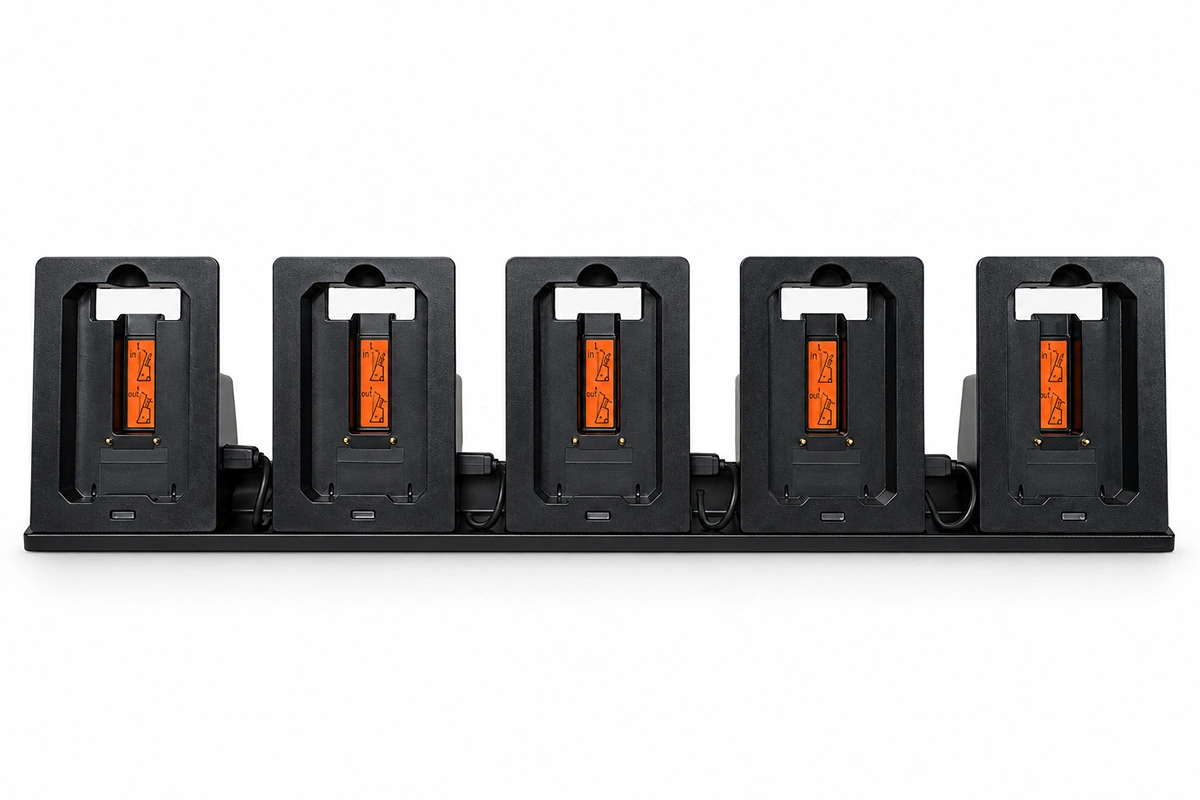
The hero photograph shows tested pagers gathered for the next stage. At this point, the focus changes from product inspection to order completeness, physical protection, identification, and preparation for transport.
Packing Contents Are Checked Against the Confirmed Order
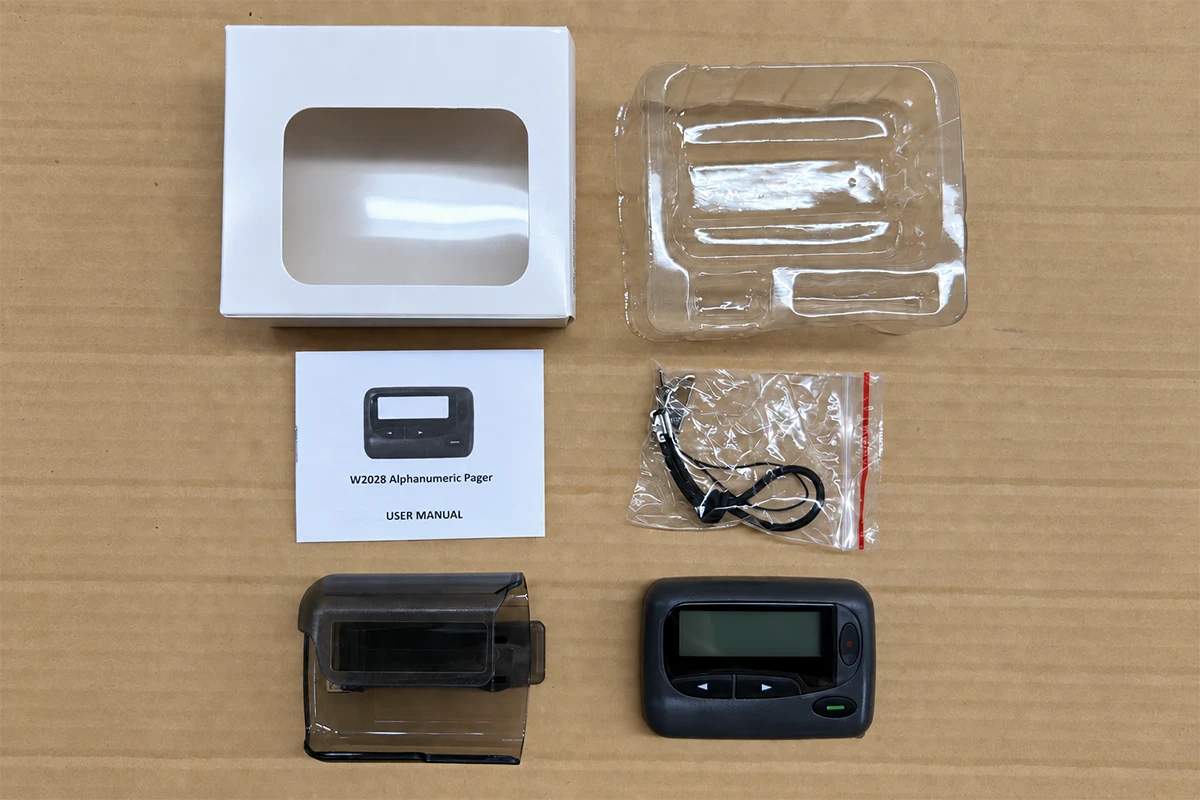
Before individual packing starts, the required components are prepared and compared with the order. The example below includes a pager, protective holster, strap, user manual, clear insert, and white individual box. These components are arranged together so the packing team can confirm that the correct items are available before the box is closed.
Packaging Contents Vary by Pager Model and Project
Not every pager order uses the same accessories or printed materials. The compact W2028P pager and the W2008P V2 pager, for example, have different battery and accessory arrangements. Logo labels, manuals, holsters, straps, inserts, blank packaging, and other order-specific items are therefore prepared according to the approved order rather than treated as one universal package.
Each Tested Pager Is Protected and Packed in Sequence
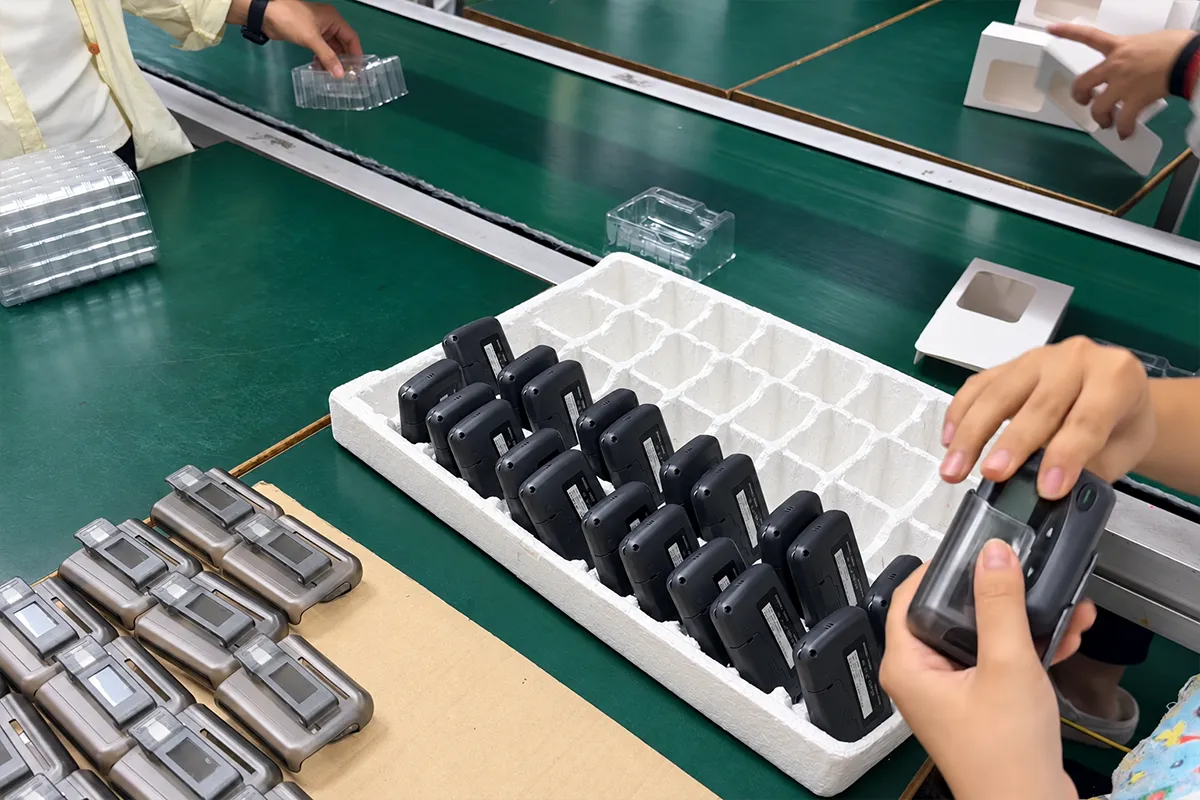
The pagers move through the packing station in an organized sequence. Protective components are fitted or positioned first, and the pager is then placed into the matching insert. Keeping the units and packaging materials arranged by stage helps the team maintain a consistent process across the batch.
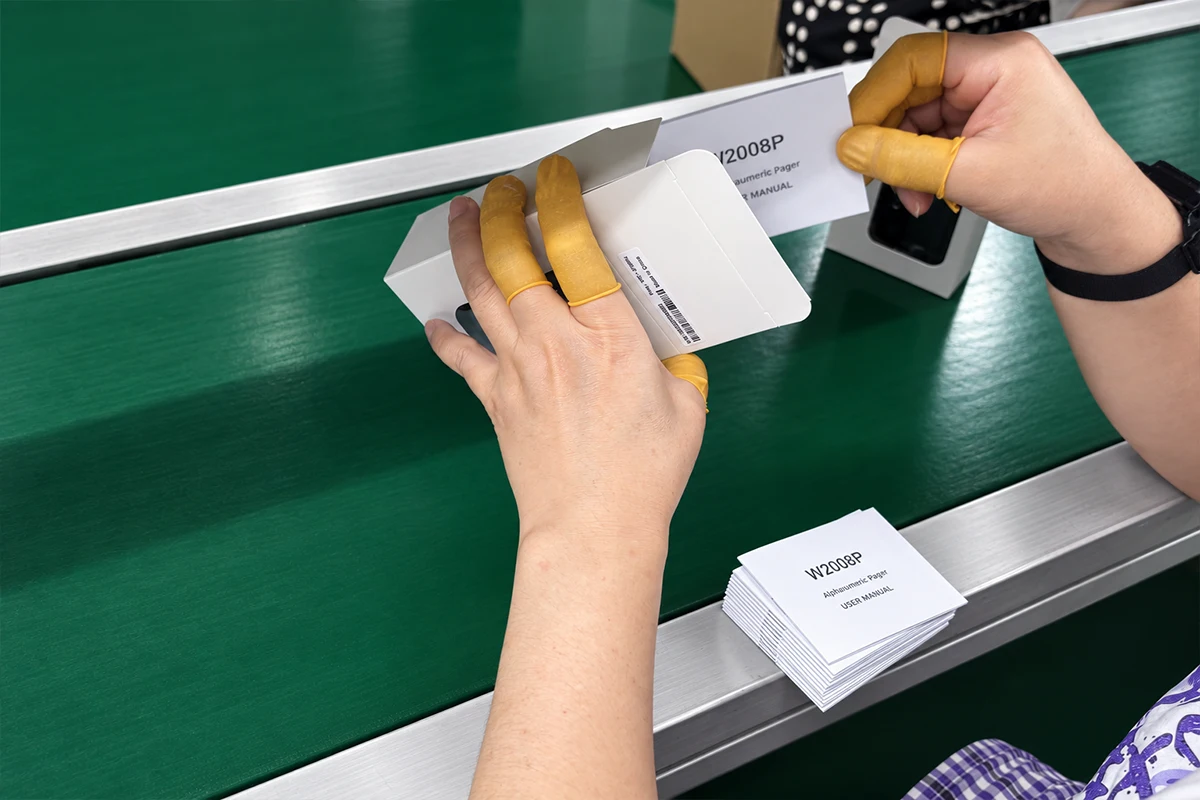
The user manual and specified accessories are added before the individual box is closed. This step is completed according to the packing list for the order. It also provides a final opportunity to notice a missing accessory, incorrect printed item, or damaged package before the box moves to the completed area.
Completed Individual Boxes Are Organized Before Carton Loading
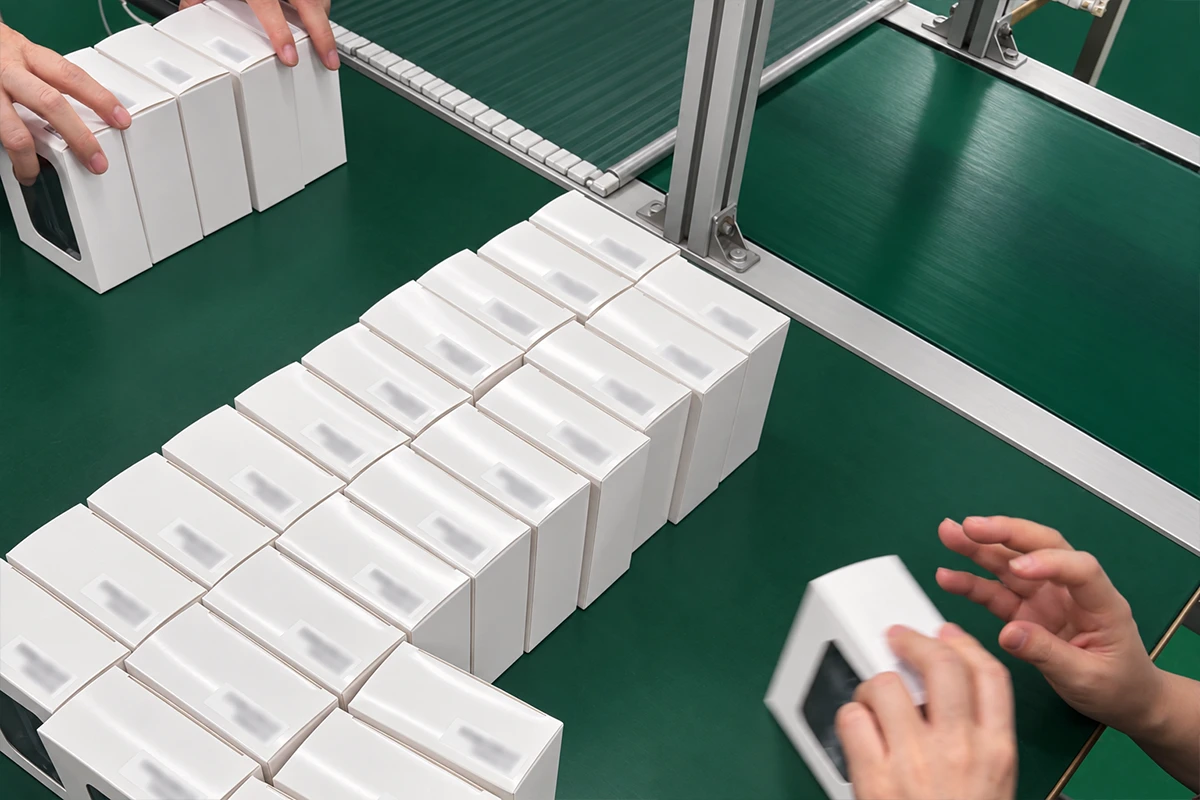
After the individual boxes are completed, they are grouped at the packing station before being transferred into master cartons. Keeping the boxes aligned and separated from unpacked materials makes the completed quantity easier to review and reduces the risk of mixing different stages of the order.
Product and order labels are applied according to the approved packing requirements. Sensitive label information has been blurred in the photographs published with this article.
Individual Pager Boxes Are Arranged Securely Inside Master Cartons
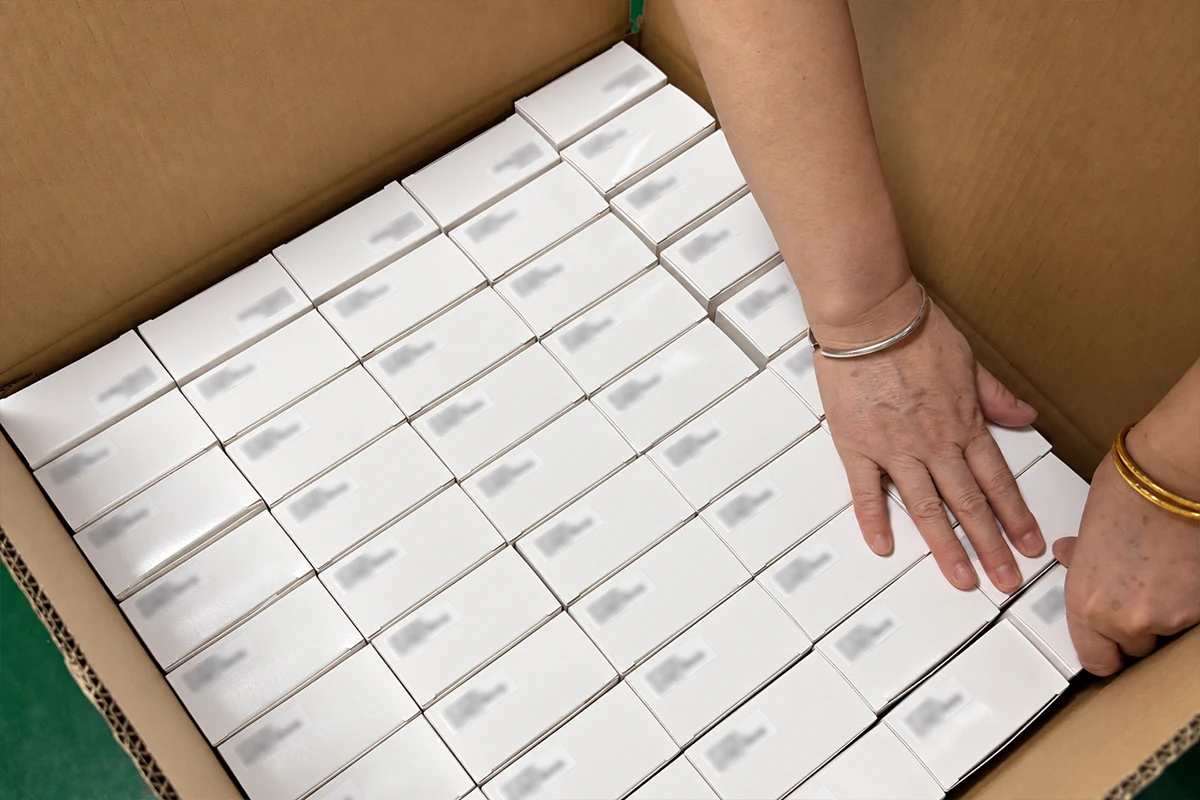
The completed individual boxes are placed into larger shipping cartons in an orderly layout. The packing arrangement is selected to use the carton space efficiently while keeping the individual packages stable during handling and transportation.
The carton quantity and arrangement depend on the pager model, packaging dimensions, order volume, and shipment requirements. Before the master carton is closed, the packed quantity is checked against the order and carton records.
Sealed Pager Cartons Are Staged for Shipment
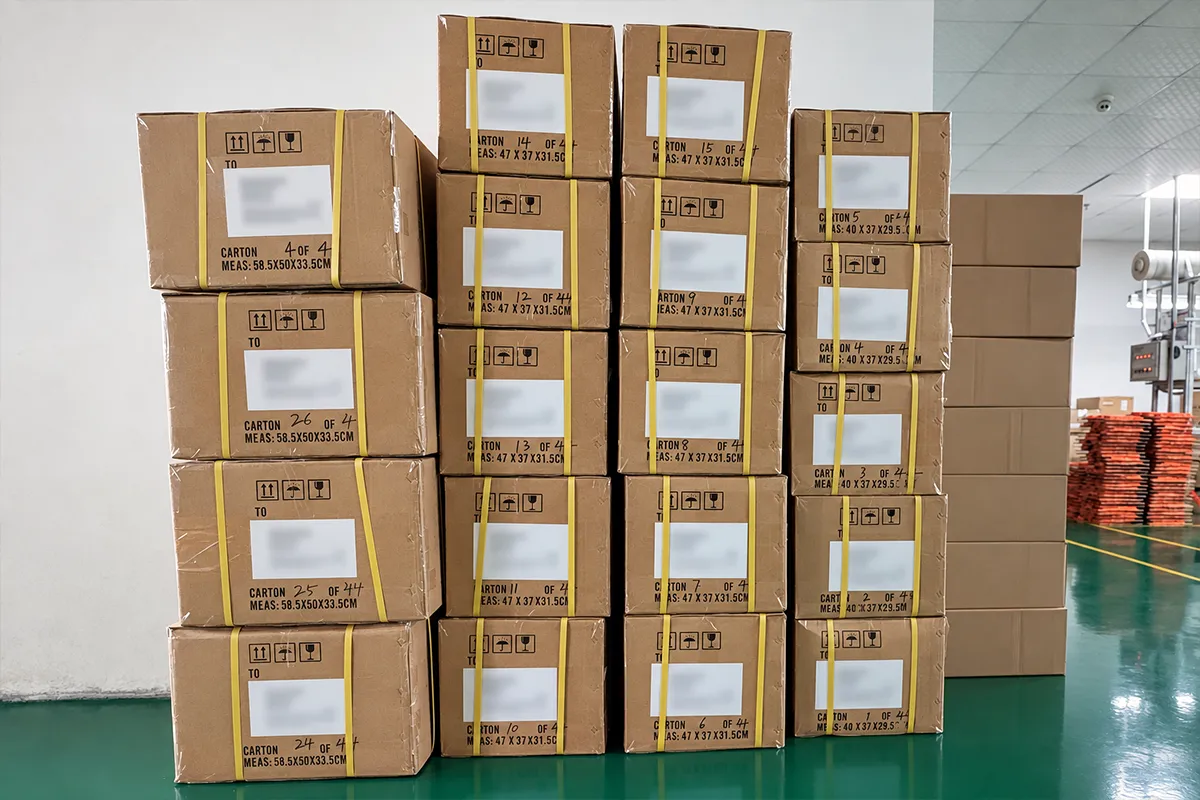
Once the cartons have been filled, checked, sealed, strapped, and identified, they are moved to the dispatch staging area. At this stage, the products inside have completed testing and packing, and the shipment is waiting for the final logistics arrangement.
The final shipping method, carton count, documentation, and delivery arrangement are handled according to the customer’s order and destination. The visible carton labels in the published image have been blurred to protect customer and shipment information.
Confirm Pager Configuration and Packing Requirements Before Production
Reliable final packing starts with a clearly confirmed order. Customers should provide the required pager model, quantity, frequency, baud rate, capcode or RIC settings, display version, accessories, logo or label requirements, manual language, and any special packaging instructions before production.
You can compare the available models on the WEX pager product page. For a quotation or project review, contact WEX with your configuration, packing, quantity, and delivery requirements.
Related Article