POCSAG Pager Frequencies: VHF/UHF Bands, Baud Rate and Capcode
Quick Answer
POCSAG pagers do not use one universal radio frequency. They can operate across different VHF and UHF ranges depending on the pager hardware, system configuration, transmitter settings, and local spectrum requirements. In WEX pager projects, frequency requirements have included VHF ranges such as 143–151 MHz and 151–159 MHz, as well as UHF ranges within approximately 438–472 MHz. These are project samples rather than official national POCSAG allocations or universal license-free frequencies.
What Frequencies Do POCSAG Pagers Use?
POCSAG is a paging protocol, not a single frequency. The protocol defines how paging data is encoded and sent, while the radio frequency determines where the RF signal is transmitted. This is why two POCSAG systems can use the same protocol but operate on different frequencies.
For a pager to receive correctly, the exact programmed frequency must be supported by the pager hardware and must match the transmitter. Knowing only that a pager is “VHF” or “UHF” is not enough.
POCSAG Pager Frequency Requirements Vary by Market and Existing System
The following examples reflect anonymous frequency-range requirements received in WEX pager projects. They are not official national allocations, market-share data, or statements about which frequencies are most common in any country.
| Market | Frequency ranges encountered in WEX pager projects |
|---|---|
| United Kingdom | 448–452, 456–460, 460–464 MHz |
| United States | 151–159, 450–470, 464–468 MHz |
| Canada | 460–464, 464–468, 468–472 MHz |
| Australia | 143–151, 438–442, 444–448, 448–452, 456–460, 468–472 MHz |
| Germany | 438–442, 448–452, 468–472 MHz |
| New Zealand | 151–159 MHz |
These examples show why buyers should not treat an online frequency list as a universal programming guide. The required frequency may depend on an existing paging network, the RF version of the pager, the transmitter, and applicable local spectrum rules.
POCSAG Pagers Can Operate Across VHF and UHF Bands
VHF POCSAG Pager Ranges Seen in WEX Projects
WEX project requirements have included VHF ranges such as 143–151 MHz, 151–159 MHz, and 159–167 MHz. The exact supported range depends on the RF hardware version of the pager. A pager designed for one VHF range should not be assumed to support another range simply because both are classified as VHF.
UHF POCSAG Pager Ranges Seen in WEX Projects
UHF requirements received in WEX projects have included 438–442, 444–448, 448–452, 456–460, 460–464, 464–468, and 468–472 MHz. Some projects also specify a broader 450–470 MHz hardware or programming range.
These ranges overlap in places, so they should not be interpreted as separate standard POCSAG bands. The practical question is always whether the specific pager hardware supports the required exact frequency.
The Pager and Transmitter Must Use the Same Exact Frequency
A transmitter and pager can both be described as UHF devices and still be incompatible. The exact operating frequency must match.
This is especially important when adding pagers to an existing system, replacing an old transmitter, or expanding a paging network. Before ordering, confirm the transmitter frequency, the pager’s supported RF range, and the exact programmed channel.
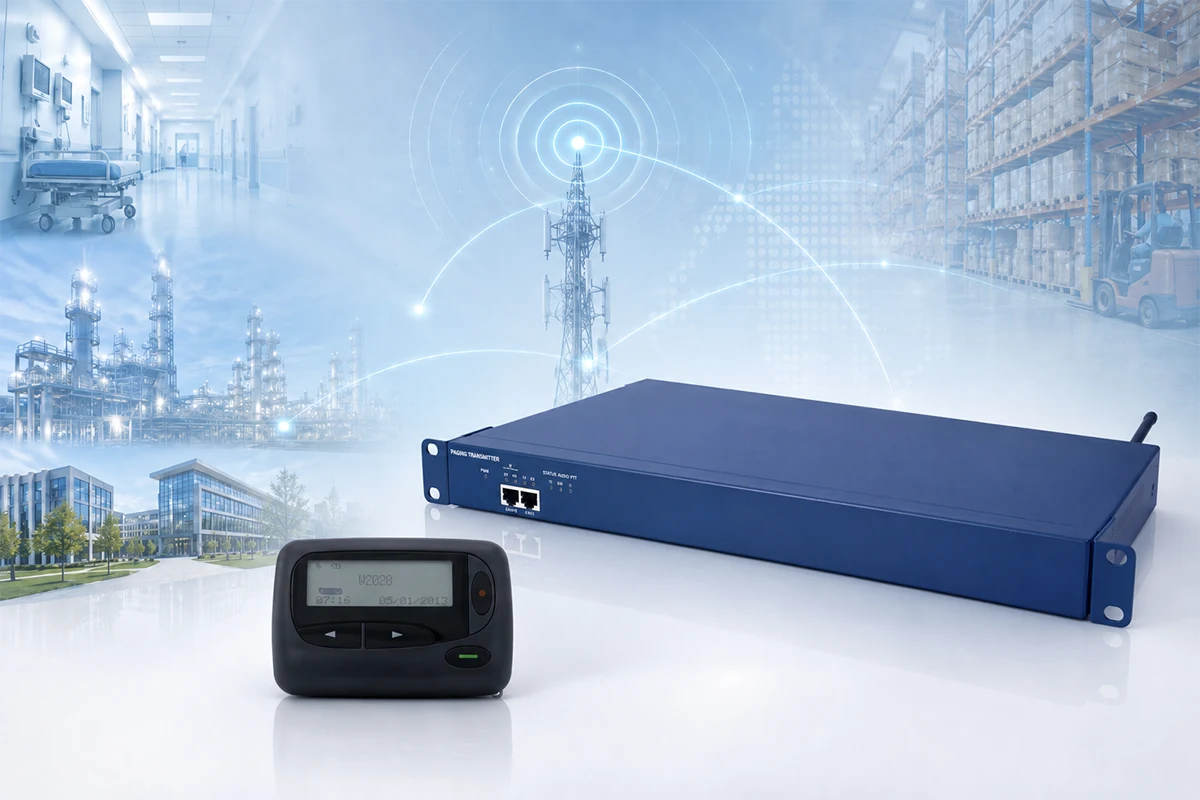
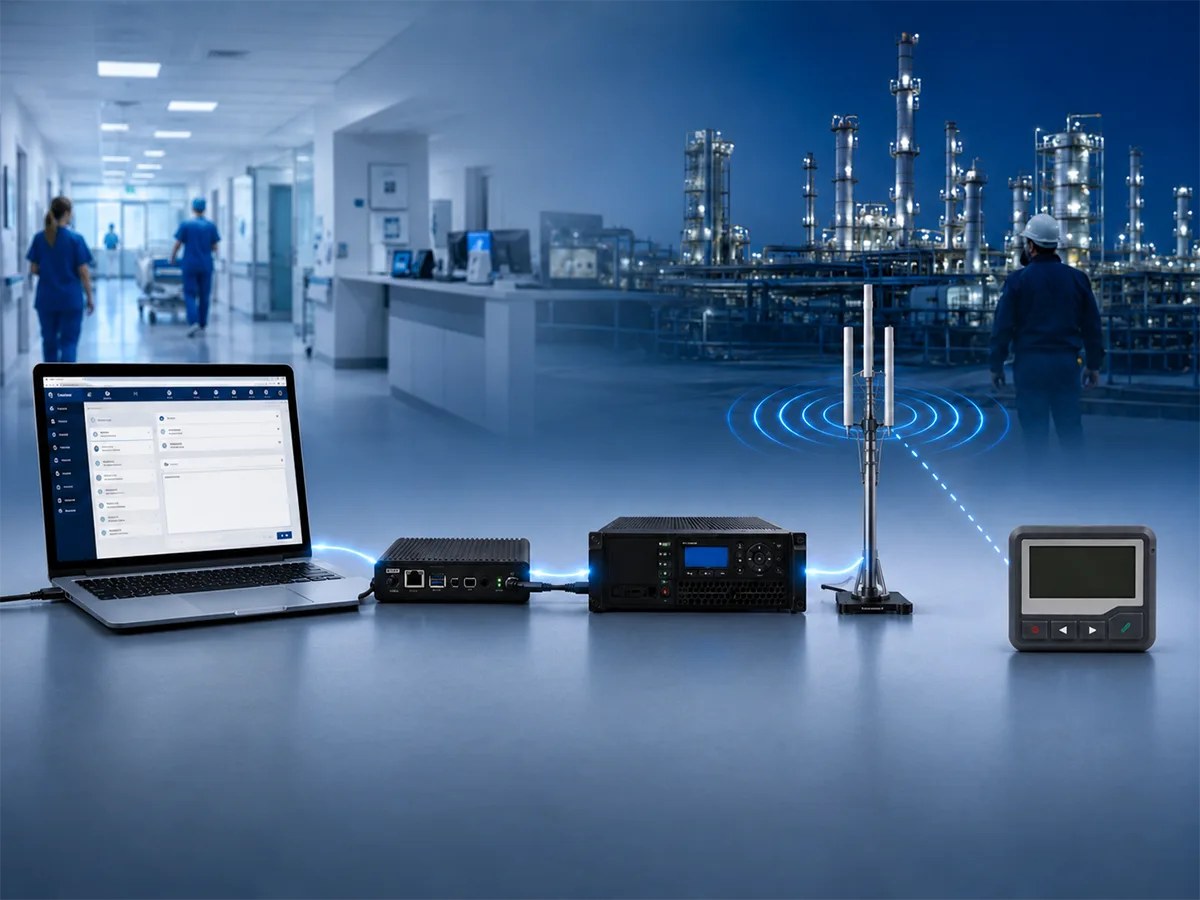
A higher-power transmitter cannot correct a frequency mismatch. If the project also requires a transmitter, the paging transmitter and pager should be checked together before programming or quotation.
POCSAG Compatibility Requires Matching Frequency, Baud Rate, and Capcode
Frequency is only one part of POCSAG compatibility. The pager must also use a compatible baud rate and the correct capcode/RIC.
Baud Rate: 512, 1200, or 2400 bps
POCSAG systems commonly use 512, 1200, or 2400 bps. Baud rate is the data rate of the paging signal; it is not the RF frequency. A system operating at a particular MHz value can still use different POCSAG baud rates, so both settings must be confirmed.
Capcode / RIC Identifies the Pager
The capcode, also called the RIC, is the pager address. It tells the pager whether a transmitted message is intended for that device or for a programmed group.
In practical terms: frequency determines where the signal is received, baud rate determines how the paging data is sent, and capcode/RIC determines which pager accepts the message. All three need to be compatible with the system.
How to Confirm the Frequency of an Existing Pager
When replacing or adding pagers, the existing system is usually the best starting point.
- Check the pager model, label, and any existing configuration records.
- Review the programming software or saved programming data if available.
- Confirm the transmitter’s exact operating frequency and POCSAG baud rate.
- Check previous system documentation, configuration sheets, or service records.
- Confirm that the new pager’s RF hardware range supports the required frequency before programming.
Do not assume that software can program a pager to any frequency. The programmable range is limited by the pager’s RF hardware version. For more details on changing frequency, baud rate, and capcode settings, see the Pager Programming Guide.
POCSAG Pager Frequency and Compatibility Checklist
| Check | What to Confirm |
|---|---|
| Frequency Band | VHF or UHF hardware range |
| Exact Frequency | Exact programmed MHz |
| Pager Hardware | Supported RF frequency range |
| Baud Rate | 512, 1200, or 2400 bps |
| Capcode / RIC | Individual or group address |
| Transmitter | Matching frequency and POCSAG configuration |
| Local Requirements | Applicable spectrum and licensing rules |
For a replacement project, it is useful to provide the current pager model, exact frequency, baud rate, capcode/RIC plan, transmitter information, and required quantity before quotation.
Frequently Asked Questions
What frequency do POCSAG pagers use?
There is no single POCSAG frequency. POCSAG pagers can operate on different VHF and UHF frequencies depending on the hardware, system design, transmitter, and local spectrum requirements.
Is POCSAG a frequency?
No. POCSAG is a paging protocol. It defines how paging messages are encoded and transmitted. The radio frequency is a separate parameter.
What is the difference between pager frequency and baud rate?
Frequency is the RF channel measured in MHz. Baud rate is the POCSAG data rate, commonly 512, 1200, or 2400 bps. A working system must use compatible settings for both.
Can a POCSAG pager be programmed to any frequency?
No. The available programming range depends on the pager’s RF hardware version. A pager can only be programmed within the frequency range supported by its hardware.
The correct POCSAG frequency is therefore not determined by the protocol name alone. It must be confirmed from the pager hardware, transmitter, existing system, and local frequency requirements.
WEX can support POCSAG pager configuration and compatibility checks for new and replacement projects. Buyers can provide the required frequency, baud rate, capcode/RIC settings, existing system details, and quantity so the pager configuration can be checked before quotation.
Warehouse Communication Systems: How to Choose Radio, PoC, Pager Alerts, and Intercom
How to Choose a POCSAG Paging Transmitter for Your Pager System
Related Article