HS Codes, Customs Value, and Import Documents for OEM Communication Devices
Quick Answer
HS codes and customs value answer two different questions. An HS code classifies imported goods, while customs value provides the basis for calculating value-based duties and related taxes. For OEM communication devices such as pagers, paging transmitters, receiver and decoder boards, and accessories, accurate product descriptions and consistent shipment documents are essential. Final classification and customs value should be confirmed by the importer, customs broker, or destination-country customs authority.
Introduction
Import costs are not determined by multiplying one tariff percentage by a product price. Classification, customs value, country of origin, and other destination-specific measures may all affect the duties, taxes, and clearance requirements applied to a shipment.
An OEM communication project may include pagers, transmitters, receiver and decoder boards, chargers, programming equipment, or other accessories. Because these items have different functions and configurations, a broad description such as “electronics” or “paging system” is rarely enough to confirm the correct classification.
This guide does not assign fixed product codes or duty rates. It explains what buyers should confirm before shipment and how the roles of the supplier, importer, and customs broker differ.
What Customs Value Means for Imported Goods
Customs value is the value assigned to goods for the purpose of assessing ad valorem customs duties. Ad valorem duties are calculated as a percentage of value.
According to the World Customs Organization’s customs valuation guidance, transaction value is normally the primary basis for valuing imported goods. It generally starts with the price actually paid or payable when the goods are sold for export to the importing country, subject to applicable adjustments.
Transaction Value Is the Usual Starting Point
A commercial invoice amount may form the basis of customs value, but the two are not automatically identical. Freight, insurance, royalties, buyer-supplied assists, or other elements may need to be included or excluded depending on the importing country’s law and the facts of the transaction.
When transaction value cannot be applied, customs valuation rules provide other methods that must be considered in the required sequence. Most OEM buyers do not need to select a valuation method themselves. They need accurate transaction records and professional confirmation from the importer or customs broker.
| HS Codes and Customs Value Answer Different Questions | ||
|---|---|---|
| Item | HS or HTS Code | Customs Value |
| Main purpose | Classifies the imported product | Establishes the basis for value-based duties and taxes |
| Main factors | Function, composition, material, use, and legal classification rules | Transaction price and adjustments required by local law |
| Effect on import cost | Helps determine the applicable duty rate and regulatory treatment | Affects the amount of value-based duties and taxes |
| Final confirmation | Importer, customs broker, or destination-country customs authority | Importer, customs broker, or destination-country customs authority |
| Supplier’s role | Provides accurate product and technical information | Provides accurate and consistent commercial and shipment records |
The first six digits of an HS code generally follow the international Harmonized System, while individual countries may add more digits for national tariff and statistical purposes. The United States, for example, uses the HTSUS for imported goods.
The U.S. International Trade Commission explains that a product cannot always be classified through a simple keyword search. Buyers must also review the legal tariff text, section and chapter notes, and the product’s actual function. The USITC Harmonized Tariff Schedule can support initial research, but binding U.S. classification decisions are issued by U.S. Customs and Border Protection.
Why OEM Communication Devices Need Precise Descriptions
“Electronic products” is not a sufficiently precise customs description. Different communication devices perform different functions and may require separate classification review.
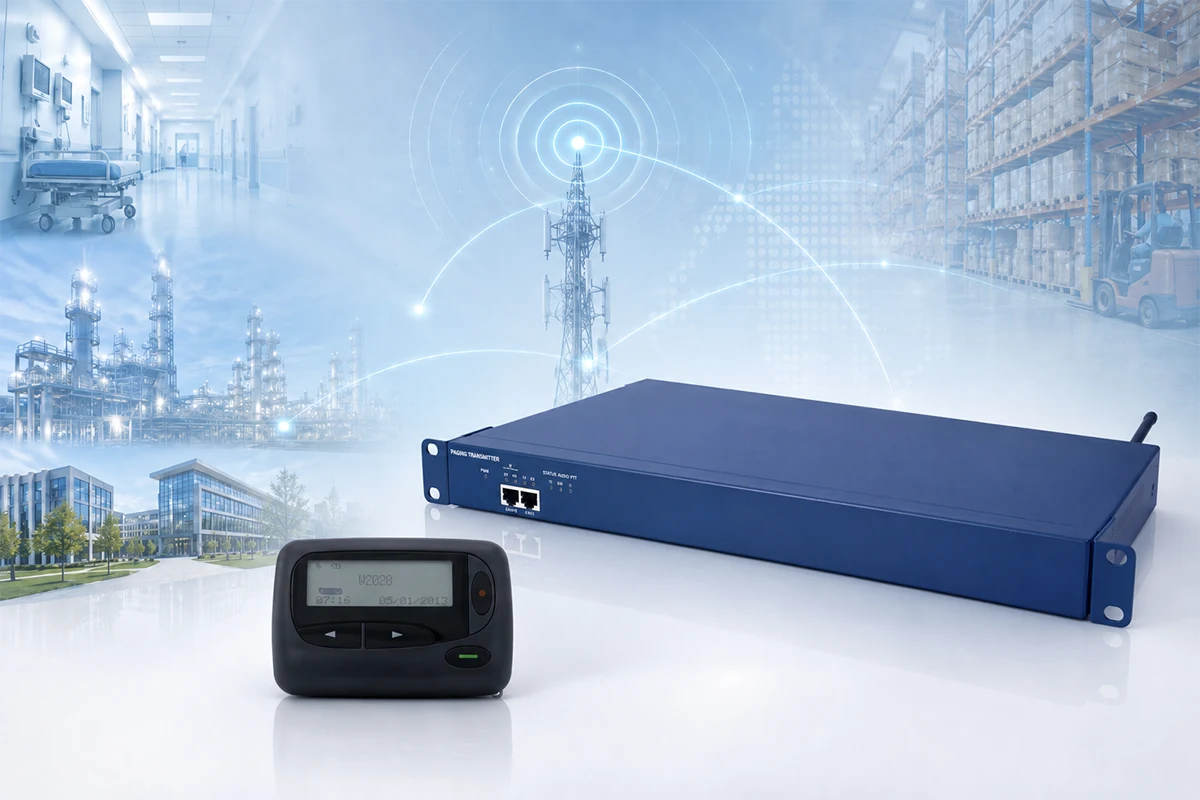
A paging project, for example, may include:
- POCSAG alphanumeric pagers that receive and display wireless messages;
- IP POCSAG paging transmitters that convert and transmit system messages as RF paging signals;
- receiver and decoder boards used for paging signal reception, decoding, or device integration;
- chargers, programming equipment, holsters, and other accessories.
There Is No Single HS Code for Electronics
Products used in the same paging system do not necessarily share one classification. A separately supplied transmitter, receiver, power device, or accessory may need to be reviewed according to its own principal function and product characteristics.
A useful product description should identify:
- what the product is;
- its principal function;
- whether it is supplied separately or as part of a system;
- its model and quantity;
- technical or construction details relevant to the actual goods.
A supplier can provide this information, but a code used for a previous shipment should not automatically be treated as correct for every country, order, or import situation.
Declared Value for Customs vs. Declared Value for Carriage
“Declared value” can refer to different concepts in shipping documents.
Declared value for customs is provided for customs review and may be used when determining duties and import taxes. Declared value for carriage generally relates to the carrier’s liability if a shipment is lost or damaged.
FedEx’s explanation of the two terms similarly distinguishes carrier liability from the value declared for customs assessment.
Before completing a form, the buyer or importer should confirm which value is being requested. Declared value for customs should not be reduced arbitrarily in an attempt to lower duties.
Commercial Invoice and Shipment Information Must Be Consistent
Effective customs documentation depends less on complicated terminology and more on whether every document accurately describes the same shipment.
Commercial invoice and shipment information should normally remain consistent regarding:
- seller and buyer information;
- invoice number and date;
- clear product names, models, and functional descriptions;
- quantities, unit prices, total value, and currency;
- packing quantities and packing-list details;
- origin information and other destination-required data;
- the products and accessories physically included in the shipment.
If a commercial invoice only says “communication devices,” while the packing list identifies several types of equipment and the shipment includes unlisted accessories, the customs broker or authority may request clarification.
Whether products and accessories require separate classification depends on their functions, how they are supplied, and destination-country rules. Buyers should not assume that every accessory automatically follows the code of the main product.
Who Confirms Classification, Value, and Documents?
The parties involved in a shipment perform different roles.
The supplier provides accurate product names, models, quantities, functional descriptions, and available shipment documents. The supplier may also help the buyer or logistics provider understand how the product is used and configured.
The importer and customs broker review the final HS or HTS classification, customs value, duty treatment, and import requirements under destination-country rules. In the United States, the importer is expected to exercise reasonable care when classifying and valuing imported merchandise.
Customs authorities retain final review authority and may request supporting information, question a declared value, or determine a different classification.
WEX Documentation Support
For WEX pagers, paging transmitters, receiver and decoder boards, and related accessories, WEX can coordinate product descriptions, commercial invoice information, packing details, and available shipment documents.
If a project requires a specific certificate or additional document, the buyer should raise the requirement before order confirmation. WEX will review feasibility, preparation time, and any additional cost before confirming whether to proceed.
For more information about product configuration, testing, and volume production, see the WEX guide to OEM pager manufacturing and quality control.
Pre-Shipment Checklist for OEM Buyers
Before an international shipment, buyers should:
- Confirm the name, function, model, and quantity of every product and accessory.
- Check whether separately supplied devices or accessories require individual classification review.
- Ask the importer or customs broker to confirm the final HS or HTS classification.
- Confirm the customs valuation method and any required adjustments under destination-country rules.
- Check that the commercial invoice, packing list, and physical shipment are consistent.
- Raise certificate, labeling, and destination-specific document requirements before order confirmation.
- Review current tariff schedules and official requirements instead of relying on an old code or duty rate.
Conclusion
A tariff percentage is only one part of import planning. Product classification, customs value, and consistent shipment documents determine how duties are applied and can affect whether customs clearance proceeds smoothly.
OEM communication device buyers should not search for one universal HS code covering every pager, transmitter, board, and accessory. A more reliable process begins with accurate product information, followed by classification and valuation confirmation from the importer, customs broker, or relevant customs authority.
This article provides general sourcing and shipment-preparation information. It does not constitute customs, tax, or legal advice. Product classification, customs value, duties, and import requirements should be confirmed according to the destination country and the specific transaction.
Frequently Asked Questions
What does customs value mean?
Customs value is the value used by customs authorities to assess ad valorem duties and related taxes. Transaction value is normally the starting point, although adjustments may be required under the importing country’s rules.
Is customs value always the same as the commercial invoice amount?
No. The invoice amount may form the basis of customs value, but local rules and transaction-specific adjustments determine whether other elements must be included or excluded.
Can pagers, transmitters, and accessories use the same HS code?
This should not be assumed. Devices with different principal functions, components, and supply arrangements may require separate classifications. The importer, customs broker, or destination-country customs authority should confirm the final codes.
Who confirms the final HS or HTS code?
The supplier provides accurate product information, while the importer and customs broker normally review the import classification. The destination-country customs authority retains final decision-making authority.
How OEM Pagers Are RF-Configured, Tested, and Controlled in Bulk Production
How Tariffs Affect Supply Chains and Global Sourcing Decisions
Related Article