Pagers in 2026: Why POCSAG and Alphanumeric Pagers Still Matter
Quick Answer: Are Pagers Still Used in 2026?
Yes. Pagers—also commonly called beepers—are still manufactured and used in 2026.
They remain part of professional communication systems in healthcare, emergency response, field maintenance, industrial manufacturing, security operations, and other environments where a short, dedicated alert needs to reach the right person quickly.
Modern pagers are not intended to replace smartphones. Instead, they provide a focused alert-receiving layer when simplicity, reliability, long standby time, and clear notification are more important than apps, cameras, or complex interfaces.
Modern POCSAG alphanumeric pagers can receive text alerts and operate as part of private or dedicated paging systems alongside transmitters, gateways, mobile applications, dashboards, radios, and other communication tools.
Pagers therefore still work in 2026, but their role is more specialized than it was during the consumer-pager era.
Are Pagers and Beepers the Same Thing?
Yes. Beeper is a common informal name for a pager, particularly in North America.
The term originally came from the audible beep produced by early paging devices when an alert was received. Modern pagers can do much more than simply beep.
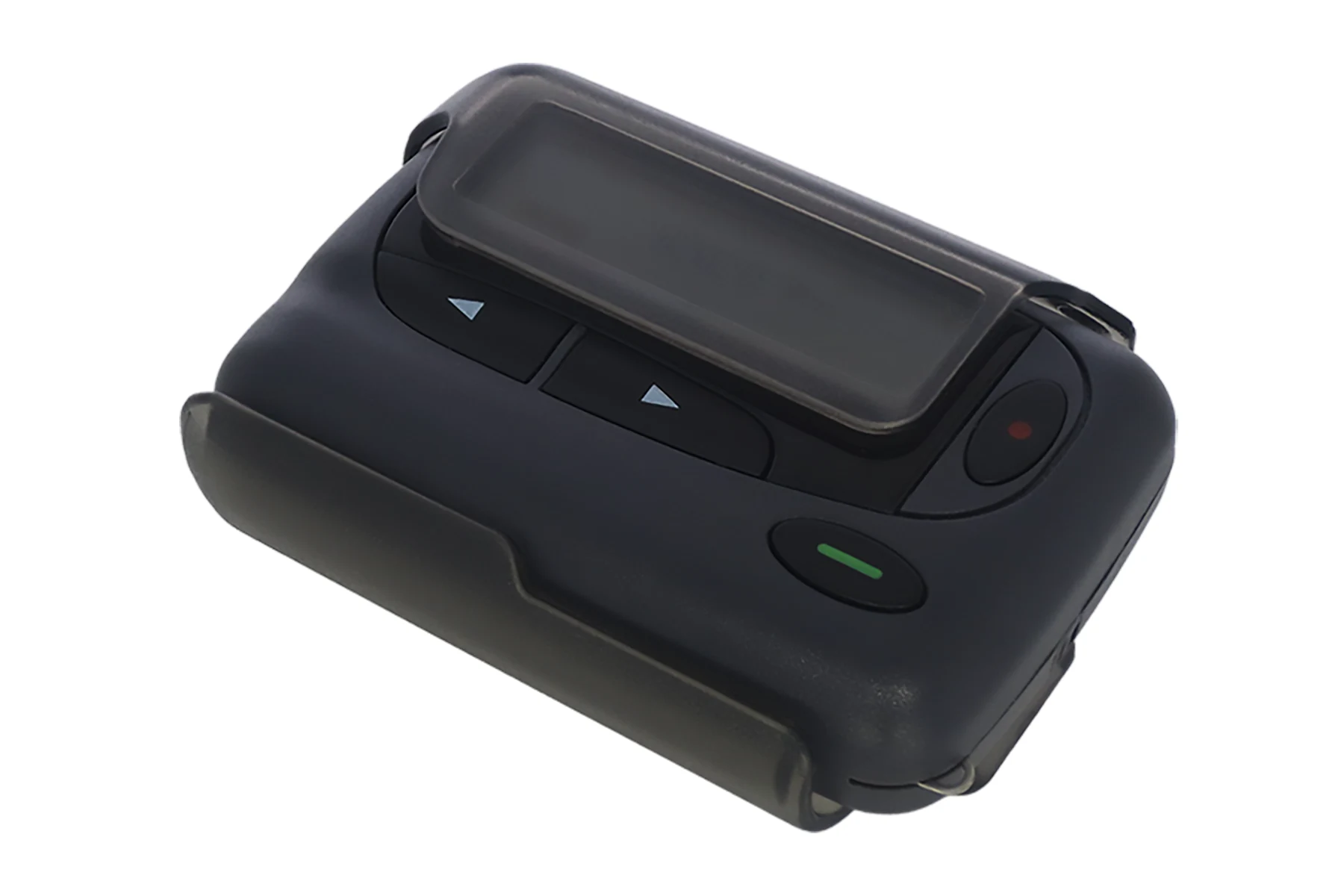
Numeric pagers display numbers, while modern alphanumeric pagers can receive text messages and may also support vibration alerts, message storage, timestamps, different alert tones, and other configurable functions depending on the model.
So when people ask whether beepers still work or whether beepers are still used in 2026, they are generally referring to the same category of paging devices.
Who Still Uses Pagers in 2026?
Pager use today is concentrated mainly in professional environments rather than the general consumer market.
Healthcare organizations may use pagers for staff alerts, nurse-call notifications, emergency messages, and other time-sensitive communication. Emergency response and security teams may use them as dedicated alert receivers, while factories and industrial facilities can use paging systems for equipment alarms, maintenance requests, and operational notifications.
Field service and facility teams may also use pagers where a simple device is preferable to relying entirely on smartphones.
The exact workflow varies by organization, but the common requirement is similar: important alerts must reach the intended person quickly and with minimal distraction.
Can You Still Buy a Pager in 2026?
Yes. Modern pagers are still manufactured and available for new and existing professional paging systems.
However, choosing a pager is not simply a matter of buying any device. Compatibility with the existing paging system can depend on factors such as frequency, paging protocol, baud rate, CAP code, and system configuration.
Modern POCSAG alphanumeric pager models are still available for organizations that need dedicated text-alert reception.
WEX provides a range of POCSAG alphanumeric pagers for different paging-system requirements.
Below are five reasons paging technology continues to remain relevant.
1. Why Pagers Still Work in 2026: Reliability Still Matters
In critical operations, success is not measured by how many functions a device has. It is measured by whether the right person receives the right message at the right time.
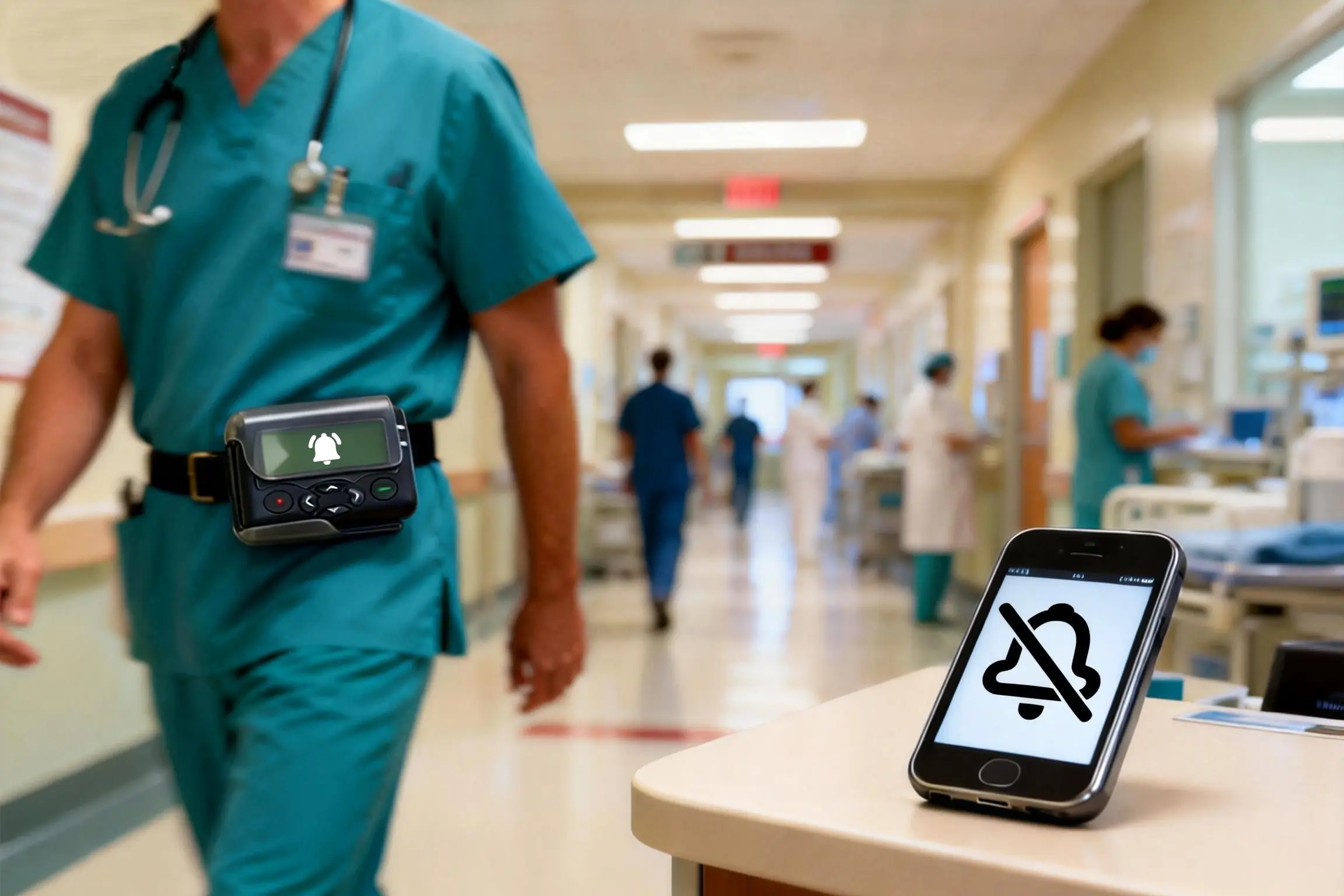
A POCSAG alphanumeric pager with suitable RF coverage, signal penetration, and receiver sensitivity can support alert reception in concrete buildings, underground rooms, large facilities, or areas where mobile phone signals may be weak or unstable.
Pagers are designed around a narrow communication task: receiving important alerts.
This is one reason paging systems continue to appear in hospitals, emergency-response environments, industrial plants, security operations, and other facilities where a dedicated alert-receiving device still has practical value.
2. Long Standby Time Is Still a Practical Advantage
Smartphones are designed to support apps, cameras, touchscreens, internet access, entertainment, and many other functions.
Pagers are optimized for alert reception and relatively low power consumption.
Battery life depends on the pager model, battery type, message volume, vibration settings, and usage environment. Some pager models use replaceable AA or AAA batteries, while others use rechargeable lithium batteries or dedicated charging accessories.
The important point is not that every pager has the same battery life. The advantage is that paging devices are generally designed around simple, low-power alert reception.
For hospitals, factories, security teams, and field-service groups managing many devices, this can reduce charging pressure, simplify daily maintenance, and support longer standby periods than many smartphone-based workflows.
3. Pagers Are Becoming Workflow Hardware
The future of paging is not only about one device receiving one message.
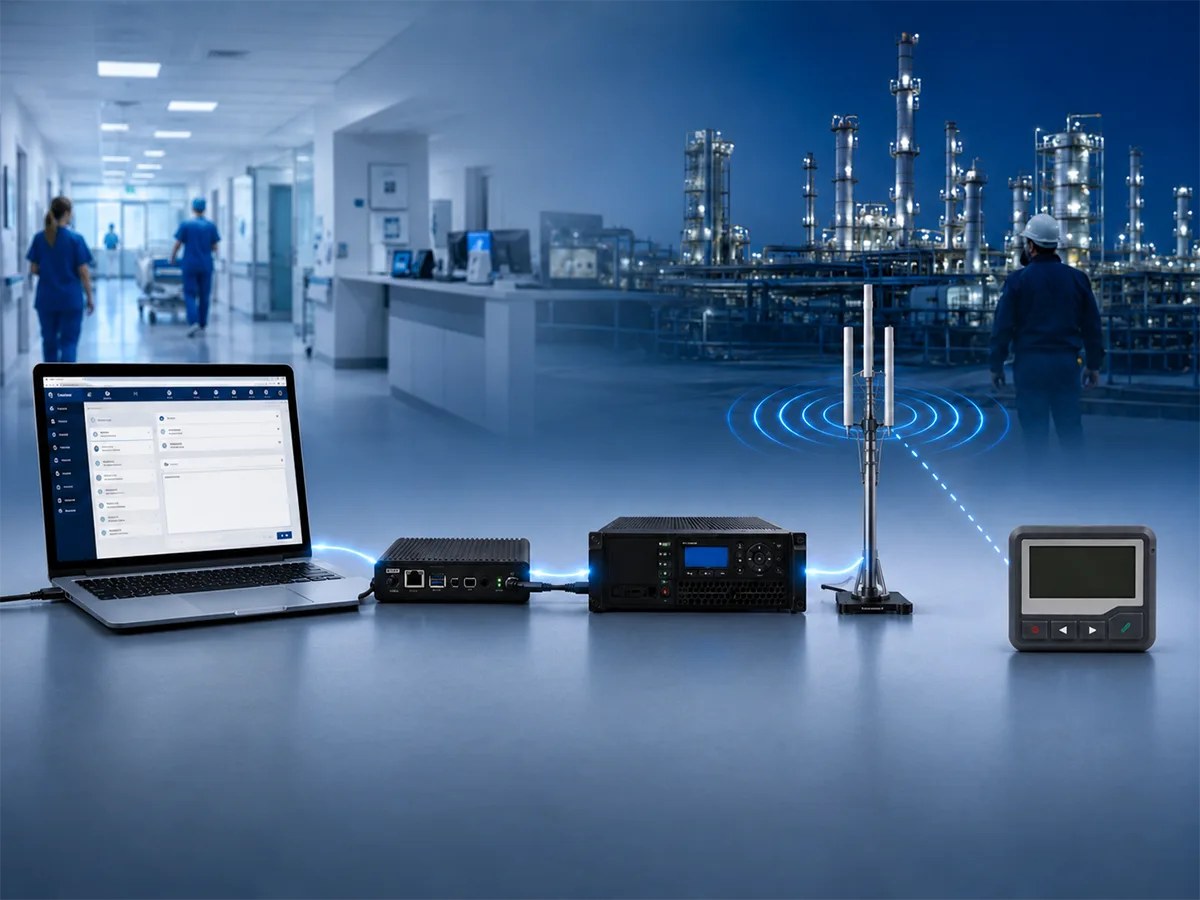
Modern paging systems can operate as part of a broader alerting workflow. A typical system may include:
Alert source → gateway / controller → POCSAG paging transmitter → antenna → alphanumeric pager
In this structure, the pager is often the final receiving endpoint inside a larger communication system.
It may receive nurse-call alerts, dispatch messages, equipment alarms, facility notifications, maintenance instructions, or emergency messages.
In healthcare, a pager can serve as a receiving endpoint within a hospital paging system, while coverage, message priority, escalation procedures, and staff response should be tested according to the actual deployment environment.
One documented example comes from a 2023 peer-reviewed study of pager use in New Zealand public hospitals, which specifically identifies the WEX W2028P alphanumeric pager and describes its use within District Health Boards.
This illustrates an important point: modern paging is often less about the pager as a standalone device and more about how the pager fits into the wider alerting workflow.
4. Low-Data Communication Still Has Value
In hospitals, security operations, industrial facilities, and emergency-response environments, communication is not only about convenience. It is also about clarity, control, and reducing unnecessary distractions.
A simple alphanumeric pager can receive essential text alerts without personal applications, private chat histories, social notifications, or unrelated messages competing for the user's attention.
A pager message can contain only what is needed: a room number, alarm type, location, task instruction, callback number, or response code.
This limited-function design can be useful in environments where staff need to recognize and act on an alert quickly.
In critical communication, minimalism can still be a strength.
5. Pagers vs. Smartphones in 2026: Why Hybrid Communication Still Matters
The future is not simply “pager versus smartphone.”
The two technologies serve different communication roles.
Smartphones are general-purpose communication devices. They are suitable for voice calls, applications, images, group discussions, reporting, and complex two-way interaction.
A pager is a more specialized alerting endpoint. Its role can be to receive a short, high-priority notification with minimal complexity.
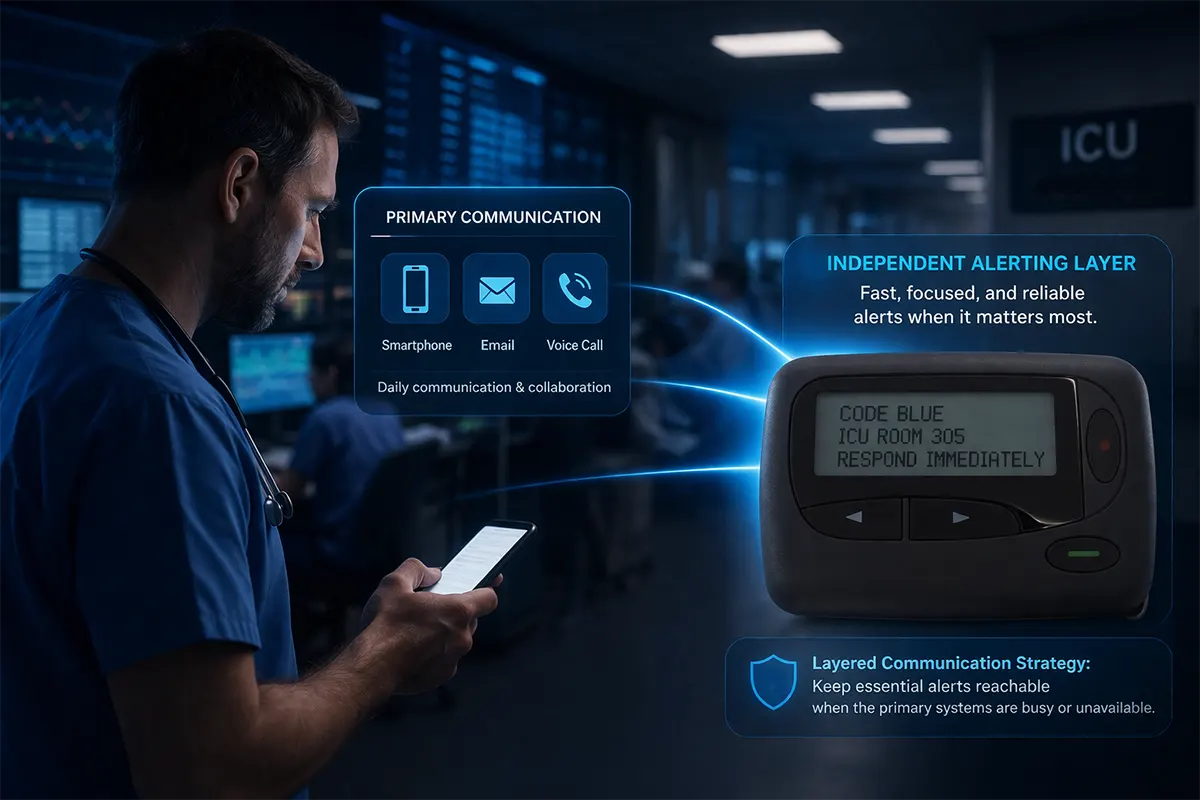
In many professional environments, the stronger model is therefore hybrid communication.
Pagers, mobile applications, dashboards, gateways, paging transmitters, radios, and dispatch software can work together at different stages of a communication workflow.
For example, a pager may receive the urgent initial alert, while a mobile application or dashboard handles acknowledgment, reporting, escalation, or follow-up communication.
RF paging can operate as a dedicated alerting layer, while other systems support coordination after the alert is received.
Instead of being fully replaced, pagers are increasingly used for a narrower and more specialized function. That limited role is exactly why they can still remain useful.
FAQs — Frequently Asked Questions
Are pagers still used in 2026?
Yes. Pagers are still used in healthcare, emergency response, manufacturing, security, field service, and other professional environments where dedicated alert reception remains useful.
Do pagers still work in 2026?
Yes. Modern paging systems can still provide reliable alert delivery when the pager, transmitter, frequency, coverage, and system configuration are suitable for the deployment environment.
Are pagers and beepers the same thing?
Generally, yes. “Beeper” is a common informal term for a pager. The name comes from the audible beep produced by early pager models when an alert was received.
Do they still make pagers in 2026?
Yes. Manufacturers still produce modern numeric and alphanumeric pagers for professional paging systems. Current models may support text messages, vibration alerts, stored messages, timestamps, and other configurable functions.
Can you still buy a pager in 2026?
Yes. Modern pagers are still available, although buyers should confirm compatibility with the intended paging system, including frequency, paging protocol, baud rate, CAP code, and other configuration requirements.
Can modern alphanumeric pagers receive text messages?
Yes. Alphanumeric pagers can receive text messages rather than only numeric codes. Depending on the model and configuration, they may also support vibration, stored messages, timestamps, multiple alert types, and other functions.
Conclusion: Why Pagers Still Matter in 2026
Pagers are no longer mainstream consumer communication devices, but that does not mean the technology has disappeared.
Modern POCSAG and alphanumeric pagers continue to solve a specific communication problem: receiving clear, dedicated alerts in environments where reliability, simplicity, low power consumption, and fast response still matter.
Whether they are called pagers or beepers, these devices now serve a more specialized role than they did during the consumer-pager era.
Their future is also not necessarily separate from newer technologies. In many systems, pagers can operate alongside smartphones, mobile applications, dashboards, radios, gateways, and dispatch platforms as one part of a broader communication workflow.
The future belongs not only to devices that can do everything, but also to devices that perform one important task well.
For hospitals, emergency teams, industrial facilities, security operations, and other critical-alert environments, that is why pagers can still matter in 2026.
What Is a Modern Pager? Features, Hospital Workflow & System Fit
Where Pagers Fit in Construction, Event, and Security Communication
Related Article