What Is a Modern Pager? Features, Hospital Workflow & System Fit
Quick Answer
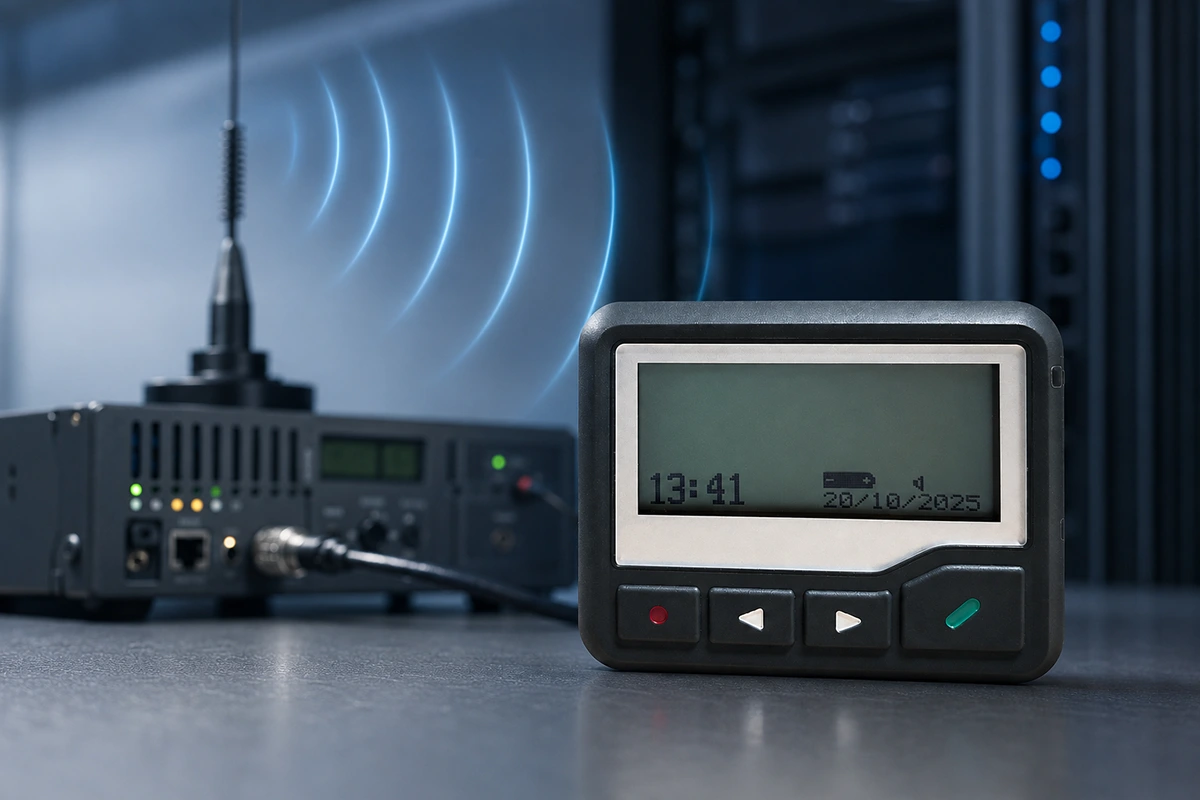
A modern pager is a compact receiver for short alerts sent over a compatible paging network. Here, the term mainly means a physical one-way alphanumeric POCSAG pager. Compared with an old numeric beeper, it may display text, support multiple addresses, and offer tone or vibration alerts. It is not a stand-alone system: it needs a compatible transmitter or paging service, and most one-way models cannot confirm that a message was read.
What Is a Modern Pager?
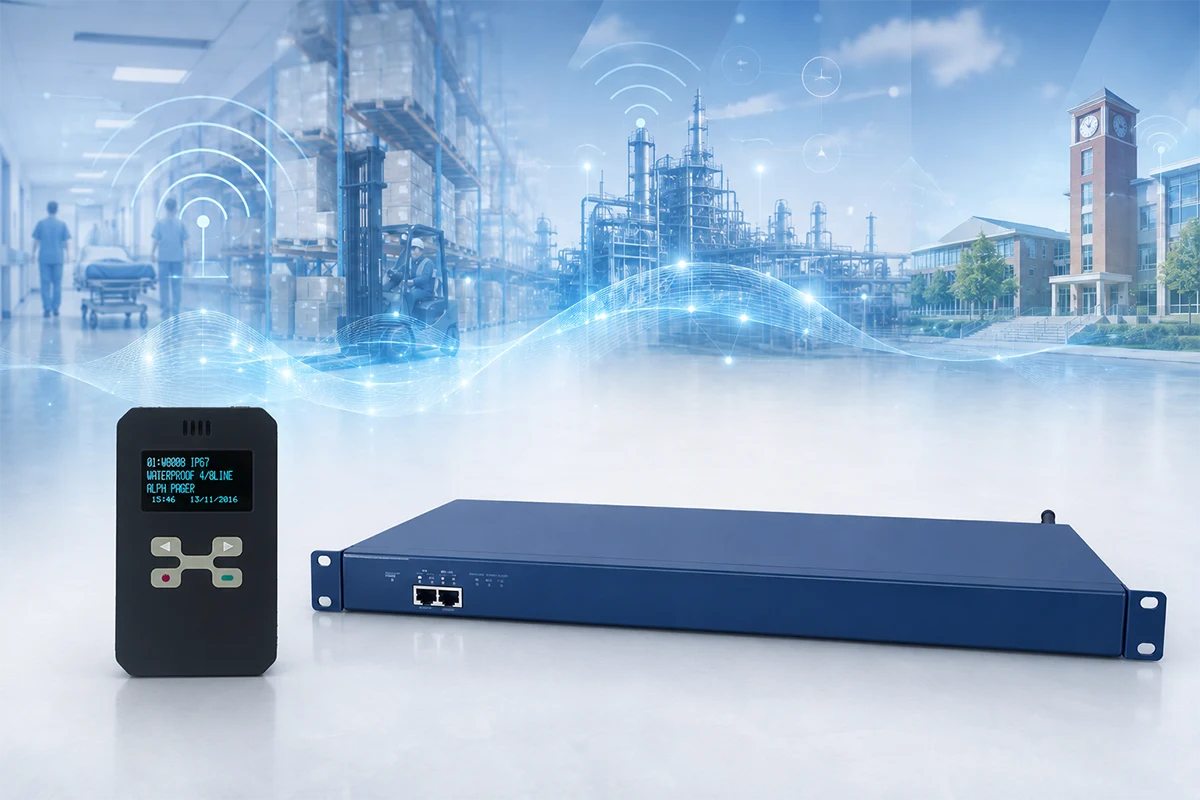
A modern pager is the receiving endpoint of a larger system. A message is created in paging software, an operator terminal, or a connected application. A transmitter broadcasts the encoded signal, and a correctly configured pager receives it.
“Modern beeper” is sometimes used informally, but current devices may show text, store alerts, use different notification modes, and receive individual or group messages. Capabilities vary by model. For the complete signal path, see how a pager works.
Old Beeper vs. Modern Alphanumeric Pager
The main difference is how much context the recipient receives before responding.
| Old Beeper vs. Modern Alphanumeric Pager | ||
|---|---|---|
| Comparison | Traditional Numeric Beeper | Modern Alphanumeric Pager |
| Message content | Usually a callback number | Numbers and short text |
| Triage context | Usually unavailable | May include urgency and reason |
| Addressing | Basic individual address | Multiple individual or group addresses, depending on model |
| Alert options | Basic audible alert | Tone, vibration, or silent mode, depending on model |
| Configuration | Often limited | Hand, PC, or over-the-air programming may be available |
| Typical response | Find a phone and call back | Read the context, prioritize, and call or attend |
An alphanumeric display can reduce uncertainty, but the recipient normally still responds by telephone, secure messaging, or an in-person visit.
How Does a Hospital Page Reach the Right Clinician?
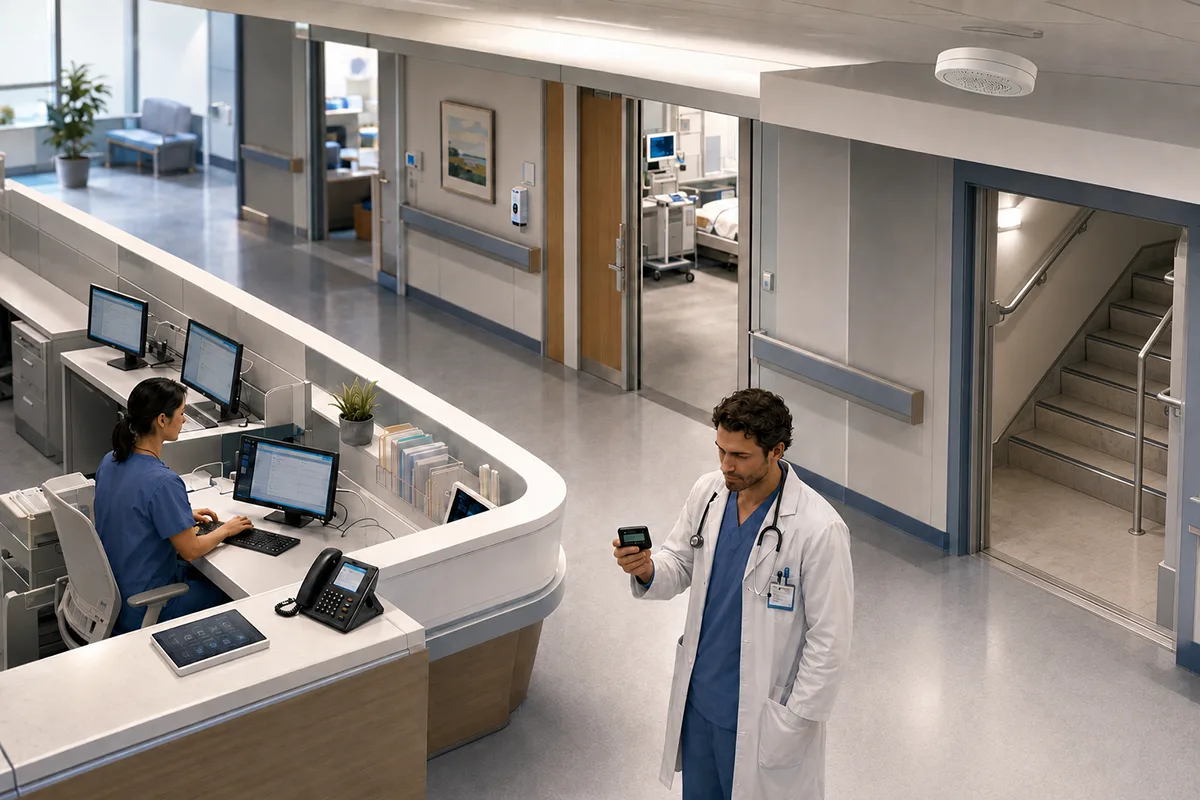
Hospital pages can originate from nurses, physicians, unit clerks, laboratories, imaging departments, operators, or automated systems. The sender usually identifies a responsible team or duty role through the electronic record, on-call directory, assignment board, or switchboard rather than selecting a doctor from memory.
A routine question may go to the primary team’s covering clinician; a specialist consultation may go to the relevant on-call service. A cardiac arrest or rapidly deteriorating patient should trigger an emergency escalation procedure, not wait for an ordinary page. This routing forms part of the wider hospital staff paging workflow.
At 2:00 a.m., a nurse records a blood pressure of 82/50 after the patient has received fluids. The nurse checks the covering team. If the patient meets emergency criteria, the nurse activates the rapid response process. Otherwise, an alphanumeric page might read:
Urgent — Room 512, BP 82/50 after 500 mL fluid. Please call ext. 4567 — Jane, RN.
The platform routes the alert to the clinician holding the medicine night-float pager. The clinician calls extension 4567, checks the record, and decides how to respond. An older numeric pager might show only “4567,” requiring a call before the clinician knows the reason or urgency.
Workflows vary. Hospitals may combine physical bleeps with task software, secure apps, voice badges, telephones, and overhead announcements. An NHS hospital out-of-hours policy, for example, describes using Nervecentre, Vocera, and bleeps to receive, triage, and allocate work.
Key Features and Practical Limits of Modern Pagers
Features may include an alphanumeric screen, programmable addresses, stored messages, different alert modes, and hand, PC, or over-the-air programming. Battery, display, ingress protection, frequency range, and address capacity vary by model. A modern hospital pager must fit both the user’s routine and the installed system.
A conventional one-way pager normally cannot acknowledge delivery, show whether a message was read, or support a discussion. It also needs a compatible transmitter or service. Coverage depends on the building, antenna, transmitter, interference, and receiver configuration, so it should be tested on site.
POCSAG messages should not automatically be described as encrypted or compliant with a privacy rule. Organizations must control content and assess the complete system under their own policies. Compatibility also requires checking frequency, baud rate, and CAP code together.
When Is a Modern Pager the Right Choice?
The workflow above shows that a pager is not a stand-alone solution. Its value depends on the network, duty workflow, and escalation process. Organizations usually purchase modern pagers to replace existing devices, expand a compatible system, or add a dedicated alert channel.
| When a Modern Pager May Fit | ||
|---|---|---|
| Situation | Why a Pager May Fit | What to Confirm |
| Replacing aging pagers | Keeps an established workflow operating | Frequency, baud rate, CAP code, and message format |
| Adding users or teams | Expands an existing compatible system | Address capacity and programming method |
| Role-based on-call alerts | A device can be handed to the person covering the role | Shift handover and escalation procedure |
| Adding a backup alert channel | Separates critical alerts from routine phone notifications | Network path, coverage, and failure procedure |
| Building a new on-site system | Creates a controlled facility alert network | Transmitter, antenna, coverage study, and local regulatory requirements |
| Requiring two-way or detailed communication | A one-way pager may be insufficient by itself | Phone, secure app, or hybrid workflow |
Clinical leaders should define senders, permitted content, and escalation. IT, telecommunications staff, or an integrator should verify the infrastructure before purchasing selects the quantity and configuration. For a device such as the W2028P alphanumeric pager, confirm the frequency, baud rate, address settings, programming method, and operating environment before ordering.
FAQs About Modern Pagers
Do Modern Pagers Still Work?
Yes, where a compatible transmitter, service, or private network is available. System compatibility and coverage—not age alone—determine whether it works.
Can a Pager Work Without a Paging System?
No. It needs a compatible transmitter or paging service. Buying a pager alone does not create a communication channel.
Are Modern Pagers Still Used in Hospitals?
Some hospitals still use physical pagers, but practices vary. Pagers may operate alongside telephones, secure apps, electronic records, and emergency group alerts.
Are Pager Messages Secure?
Not automatically. Security depends on the protocol, infrastructure, content, procedures, and organizational policies. Hospital use alone does not make a message secure.
Conclusion
A modern pager can provide a simple, focused alert endpoint, but it is only one part of a complete workflow. Before purchasing, an organization should decide whether one-way alerting fits the use case, then match the device to the network, duty roles, message rules, coverage plan, escalation process, and technical settings.
Can a Paging System Be HIPAA Compliant? What Hospitals Must Confirm
Pagers in 2026: Why POCSAG and Alphanumeric Pagers Still Matter
Related Article