What Does IP67 Mean for a Pager?
Quick Answer
IP67 is an Ingress Protection rating that describes protection against dust and water. For an IP67 pager, the first digit 6 means the enclosure is dust-tight, while the second digit 7 means it is protected against temporary immersion in water. In practical use, IP67 provides strong protection against dust, rain, splashes, and temporary water exposure, but it is not intended for continuous underwater use.
What Does IP67 Mean?
The IP Code is defined in IEC 60529, the international standard for degrees of protection provided by electrical equipment enclosures.
An IP rating normally contains two digits:
- 6 — Dust-tight: the highest solid-particle protection level in the IP scale.
- 7 — Temporary immersion: protection against the effects of temporary immersion in water.
The two digits measure different things. The first describes protection against solids and dust, while the second describes protection against water. IP67 is therefore more informative than a general product description such as “waterproof.”
Intertek also provides an Ingress Protection testing overview showing how the individual dust and water protection levels are classified.
Is an IP67 Pager Waterproof?
“Waterproof pager” is a common way to describe this type of device, but the IP67 rating gives buyers more useful information because it defines both dust and water protection.
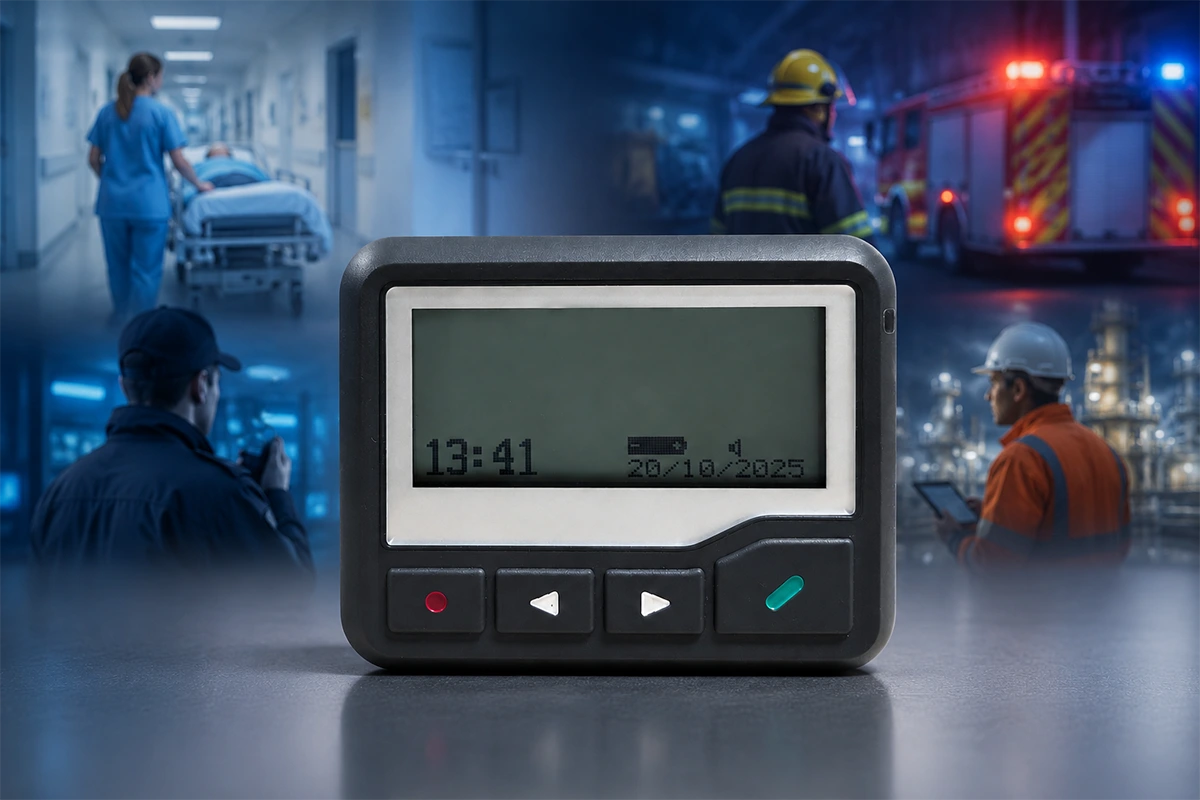
An IP67 pager is dust-tight and can withstand rain, accidental splashes, and temporary immersion. This makes IP67 particularly useful for pagers carried in demanding workplaces where exposure to water or dust is possible.
IP67 does not mean continuous underwater operation or protection against every possible type of water pressure. For normal professional use, however, it represents a high level of enclosure protection.
IP67 vs IP68: What Is the Difference?
IP67 and IP68 both use the highest dust-protection digit, 6, so both indicate a dust-tight enclosure. The difference is the second digit, which describes water protection.
IP67 protects against temporary immersion, while IP68 provides a higher level of protection for continuous immersion. IP68 is therefore a higher water-ingress class, but that does not make IP67 a low protection level.
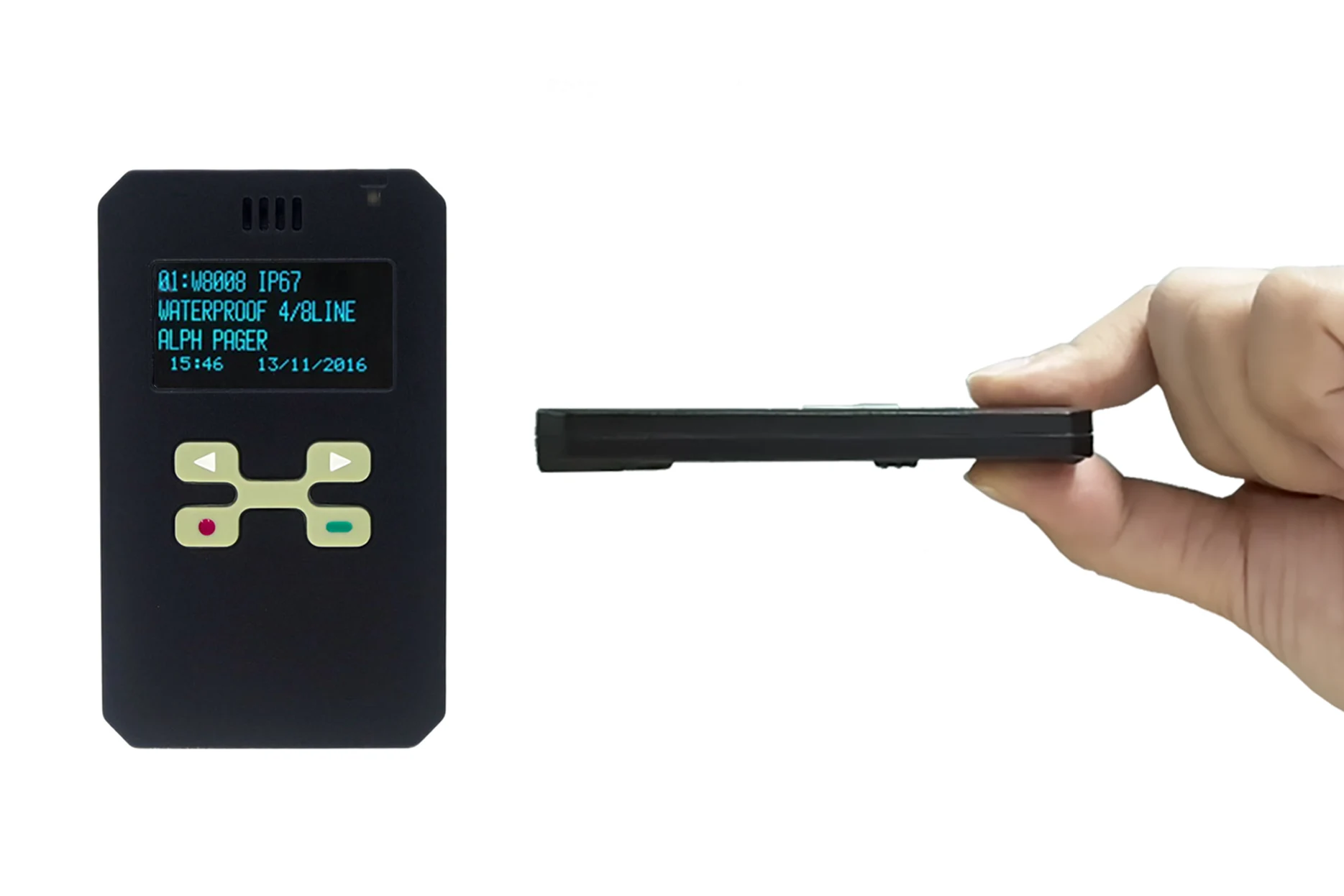
WEX W8001 and W8008 pagers are rated IP67.
IP Rating vs Water-Resistant vs Rugged Pager
These terms are often used together, but they describe different things.
| Term | What It Tells You |
|---|---|
| IP67 | Dust-tight protection plus protection against temporary immersion |
| IP68 | Dust-tight protection plus a higher level of protection for continuous immersion |
| Water-resistant | A general description unless a specific IP rating or test is stated |
| Rugged | A broader durability description that may include housing strength, impact resistance, or other features |
A rugged pager is not automatically IP67 or IP68, and an IP-rated pager is not automatically drop-proof. Impact resistance, housing strength, and other durability characteristics are separate product properties.
Why Does IP67 Matter for a Pager?
Professional pagers may be exposed to rain, accidental splashes, dust, or dirty working conditions during everyday use. An IP67 enclosure gives the pager a strong level of protection against these common environmental risks.
This can be useful in industrial, security, and outdoor work environments. Environmental protection is still only one part of device selection: communication workflow, paging coverage, and system compatibility also matter, as discussed in our guide to construction, event and security communication.
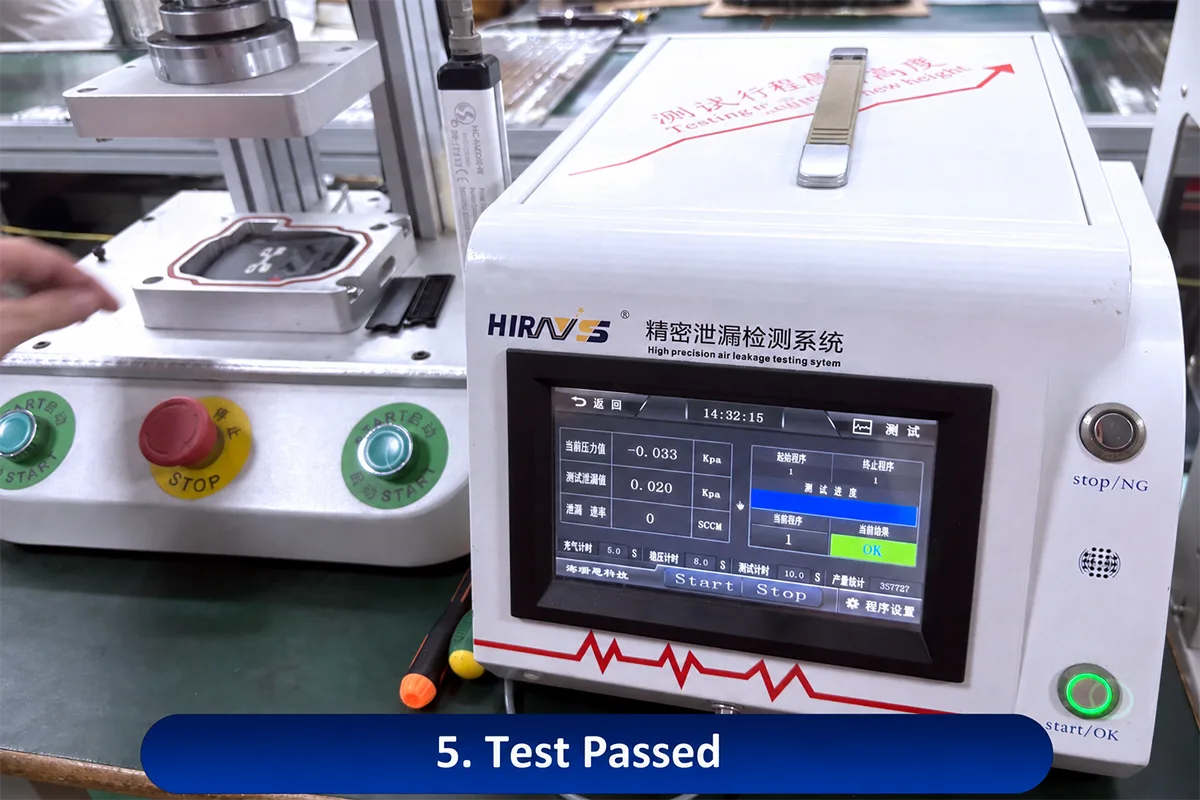
Product quality control is also important. At WEX, applicable water-resistant pager models undergo airtightness checks as part of pager production testing.
Which WEX Pagers Have an IP67 Rating?
WEX currently lists two IP67 models in its POCSAG alphanumeric pager range.
W8001 IP67 AA-Battery Pager
The W8001 uses a replaceable AA battery and is designed for professional alphanumeric paging applications.
W8008 IP67 OLED Rechargeable Pager
The W8008 uses a rechargeable battery and OLED display for text alert reception.
The appropriate model still depends on the required frequency, POCSAG baud rate, capcode/RIC, battery preference, and existing paging system.
What IP67 Does Not Tell You
IP67 is a strong dust and water protection rating, but it does not describe every type of durability.
- It does not mean continuous underwater operation.
- It does not mean protection against powerful water jets.
- It does not automatically mean drop or impact resistance.
- It does not describe resistance to every chemical or corrosive liquid.
- It does not replace the complete product specification.
Buyers should therefore use the IP rating together with the pager's RF, battery, display, housing, and system compatibility specifications.
Frequently Asked Questions
Is an IP67 pager waterproof?
An IP67 pager is dust-tight and protected against rain, splashes, and temporary immersion. “Waterproof” is a common general description, while IP67 gives the specific protection level.
Can an IP67 pager be used in the rain?
Yes. Rain and accidental splashes are within the type of water exposure an IP67 enclosure is designed to handle. IP67 also provides protection against temporary immersion.
Is IP68 better than IP67?
IP68 provides a higher level of water-ingress protection because it covers continuous immersion, while IP67 covers temporary immersion. Both ratings indicate a dust-tight enclosure.
Is an IP67 pager the same as a rugged pager?
No. IP67 specifically describes dust and water ingress protection. “Rugged” is a broader term that may describe impact resistance, housing strength, or other durability characteristics.
Which WEX pagers are IP67 rated?
The WEX W8001 and W8008 are currently listed as IP67 pager models.
Conclusion
IP67 gives buyers a clear, standardized way to understand a pager's protection against dust and water. It means dust-tight protection together with protection against temporary immersion, making it more useful than a vague “waterproof” description.
For a professional pager project, IP rating should be considered together with frequency, POCSAG baud rate, capcode/RIC, battery requirements, and compatibility with the existing paging system.
Pager Battery: Match the Model and Charge Only Rechargeables
After Testing Is Complete: How WEX Pager Orders Are Packed for Shipment
Related Article