Manufacturing Communication Systems: How Machine Alarms Reach the Right Staff
Quick Answer
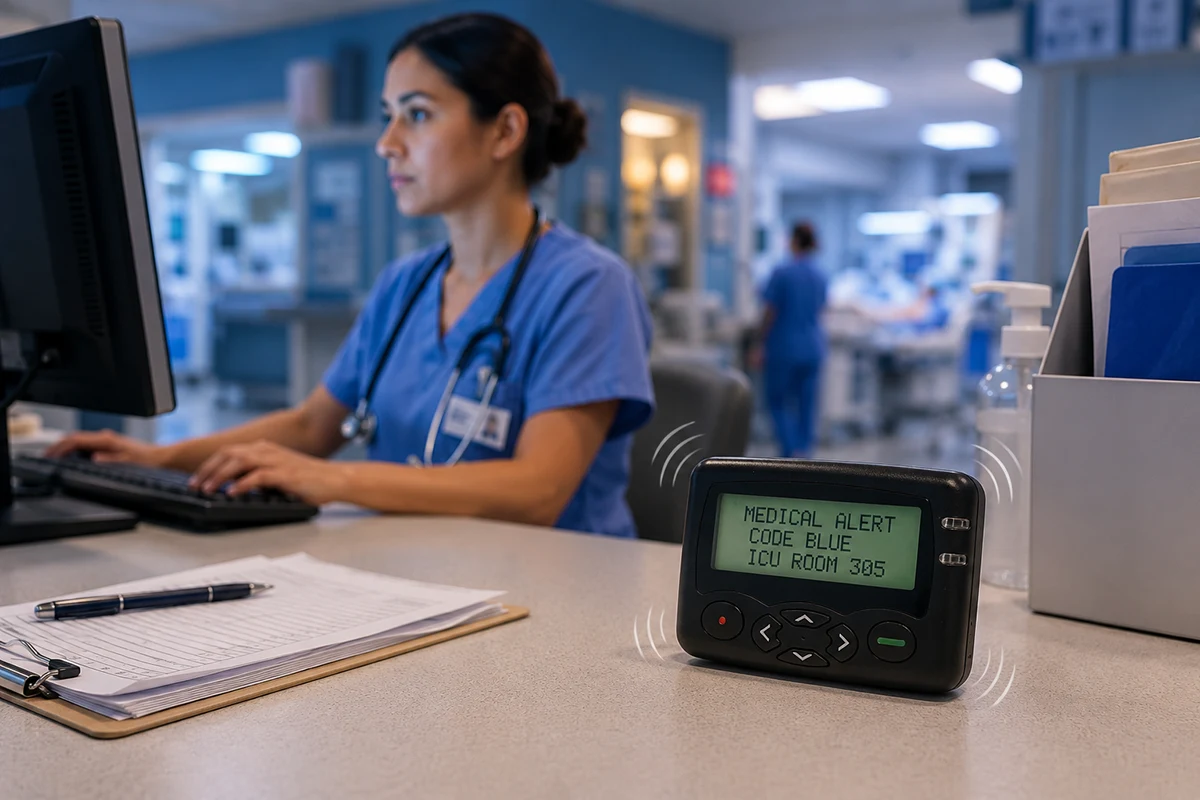
Manufacturing communication systems connect event sources, communication channels, receiving devices, and staff response. A machine alarm may be routed to a pager for a targeted text alert, followed by PoC radio communication for real-time coordination. Plant-wide emergencies may require PA or intercom announcements. The goal is to make sure the right message reaches the right employee quickly and has a clear escalation path.
Why Machine Alarms Do Not Always Reach the Right Staff
A machine can detect a fault immediately, but the right employee may still miss it. Some alarms remain on a local display. Others reach a control room but not the technician working elsewhere. Messages may also lack the machine name, location, urgency, or required action.
Communication also fails when every alert goes to the same group. Routine notices create noise, while critical events may be buried among lower-priority messages. Shift changes, mobile workers, loud production areas, and separate buildings add delay.
The gap may be technical, procedural, or human. A legacy machine may not connect to the staff notification system, recipient rules may not reflect night shifts or absent technicians, and employees may ignore messages after receiving too many low-priority alerts. Clear routing and meaningful content are therefore as important as the receiving device.
Map the Alert Workflow Before Choosing Devices
Before selecting pagers, radios, software, or speakers, map the complete route:
Event source → alert decision → recipient selection → communication channel → staff response
The source may be a machine, sensor, fire panel, operator, or software platform. A controller or application then decides whether the event should be logged, sent immediately, or escalated.
Next, identify the recipient. A machine fault may go to maintenance, a safety incident to the safety team, and an evacuation order to everyone on site.
The workflow should also define what the recipient must do: inspect the equipment, confirm receipt through another channel, contact a supervisor, or record the result. Recording who resolved the issue and when completes the response process.
Where pagers are used, the controller can route the message through a transmitter to the selected device, following the same basic delivery path described in how a paging transmitter works in a complete system.
Classify Alerts by Priority, Recipient, and Response Time
Before selecting a communication channel, manufacturing teams should classify each event according to its urgency, intended recipient, and required response time. This prevents minor updates from creating unnecessary alarm traffic and helps critical events reach the people who can act on them.
Alert Priority
Routine events include scheduled maintenance and non-urgent updates, such as filter replacement reminders, production completion notices, or a maintenance task planned for the next shift.
Warning events require attention within a defined period. A rising motor temperature, low material level, or repeated equipment fault may not justify an emergency shutdown, but maintenance or production staff should investigate before the condition becomes more serious.
Critical events require immediate action because they may affect safety, production, equipment, or product quality. Examples include fire alarms, gas leaks, emergency stops, dangerous temperature excursions, and failures that could damage a production line.
The priority level should influence message visibility, the first communication channel, and whether automatic escalation is required.
Primary Recipient
Each alert needs a clear owner, such as an operator, maintenance technician, supervisor, safety officer, security team, or plant manager.
A local machine fault may first go to the technician assigned to that production area. A temperature alarm affecting product quality may need to reach both maintenance and the quality team. A safety incident may require simultaneous notification of the safety officer, production supervisor, and emergency response group.
Recipient rules may also change by shift, department, location, or employee availability. Routing alerts according to responsibility is more effective than broadcasting every event to the entire workforce.
Required Response Time
Define whether the recipient must respond immediately, within a set time, or only review the information later. This determines whether a one-way alert is sufficient or a two-way channel is required.
A maintenance reminder may only need review before the next shift. A machine warning may require inspection within ten minutes. A fire, gas leak, or serious equipment failure may require immediate action and automatic escalation.
A pager can deliver the first targeted alert, while PoC radio or another two-way channel supports confirmation and coordination. The response deadline determines when the system should contact a backup technician, supervisor, or safety team.
Match Each Alert to the Right Communication Channel
Pager Alerts for Machine and Maintenance Notifications
Pagers are useful when a short, targeted message must reach a specific person or team. Typical uses include machine faults, temperature warnings, maintenance requests, and location-specific alerts.
In noisy production areas, vibration and readable text can help employees notice the message without broadcasting it to everyone nearby. The alert can include a machine number, location, problem, and required action.
A message such as “Line 3 temperature high—inspect within 10 minutes” is more useful than “Alarm 102,” because an effective alphanumeric pager message format should identify what happened, where it happened, and what action is required.
Standard POCSAG pagers are generally one-way. When acknowledgement is required, the workflow should add an escalation or two-way follow-up channel.
PoC Radio for Real-Time Coordination
PoC radio is useful after an alert has been received and several employees need to coordinate. Maintenance, safety, production, and management teams can use group or selective calls to discuss the problem and assign tasks across work areas or sites.
It may be especially useful when a plant includes several buildings, a warehouse, loading areas, or remote supervisors.
Plants choosing between network-based push-to-talk and conventional radio should consider site coverage, cross-location communication, network dependence, and infrastructure requirements when comparing PoC radio vs two-way radio.
PA or Intercom for Plant-Wide Instructions
PA and intercom systems suit evacuation orders, shelter notices, or immediate production stops. They provide broad reach but cannot target individuals or deliver detailed private instructions.
A public announcement can tell everyone what to do, while separate pager or radio messages can direct the safety, maintenance, or emergency response teams handling the incident.
Mobile or Software Notifications for Non-Urgent Updates
Apps, email, dashboards, and workflow systems are useful for reports, task lists, maintenance records, and lower-priority updates. They can also preserve event history and connect alerts with work orders.
They should not be the only urgent-alert channel when visibility depends on login status, network access, and user attention.
Build an Escalation Path for Missed Alerts
Every critical alert needs a next step if the first recipient does not respond. The plan may notify a second technician, the full maintenance group, a supervisor, or the safety team after a defined period.
A pager can deliver the initial targeted alert. PoC radio, telephone, or another two-way channel can then support confirmation and coordination. Severe events may also require a plant-wide announcement.
For example, a temperature warning may first reach one technician by pager. If it remains unresolved after five minutes, the alert can move to the maintenance group and then to the supervisor. If the condition becomes a safety risk, the safety team may need to be notified through a second channel.
Escalation rules should define timing, backup recipients, alternate channels, and responsibility for closing the event.
Example Workflow: From Machine Fault to Maintenance Response
Consider a packaging machine that detects abnormal temperature:
- The controller generates a warning.
- The alert logic identifies the machine, location, and priority.
- The assigned technician receives a pager message: “Line 3 motor temperature high—inspect within 10 minutes.”
- The maintenance group uses PoC radio if coordination is needed.
- If nobody responds within the set time, the alert escalates to the supervisor.
- If the condition becomes a safety risk, the safety team and relevant production staff are notified.
- The final action, response time, and downtime are recorded.
This example shows why the first alert, coordination channel, escalation rule, and final record should be planned as one workflow.
Manufacturing Alert Communication Workflow Checklist
The table below helps manufacturing teams assign a priority, recipient, first channel, escalation method, and required response to common plant events.
| Event Type | Priority | Primary Recipient | First Channel | Escalation Channel | Required Response |
|---|---|---|---|---|---|
| Machine fault | Warning or critical | Maintenance technician | Pager alert | PoC radio and supervisor | Inspect within defined time |
| Temperature excursion | Critical | Maintenance and quality team | Pager and software alert | PoC radio and management | Immediate investigation |
| Routine maintenance request | Routine | Assigned technician | Workflow software | Pager or supervisor | Complete as scheduled |
| Safety incident | Critical | Safety team and supervisor | PoC radio or direct alert | PA, management, emergency services | Immediate response |
| Plant evacuation | Critical | All personnel | PA or intercom | PoC radio and pager alerts to response teams | Immediate evacuation |
A useful manufacturing communication system gives every event a clear owner, suitable channel, escalation route, and expected response.
Frequently Asked Questions
What Is a Manufacturing Communication System?
It combines machines, sensors, software, notification channels, receiving devices, and response procedures to move operational and safety information to the correct employees.
Can Machine Alarms Be Sent to Pagers?
Yes. A compatible controller or messaging platform can route an alarm through a paging transmitter to selected pagers. Frequency, baud rate, capcode/RIC, message format, and interfaces must match.
When Should Manufacturing Teams Use PoC Radio?
PoC radio suits real-time two-way coordination across departments, buildings, or distant sites where suitable cellular or Wi-Fi service is available.
What Is the Difference Between a Pager Alert and a PA Announcement?
A pager alert targets an individual or group with a short message. A PA announcement broadcasts voice information throughout a covered area.
How Should Critical Alerts Be Escalated?
Define a response deadline, backup recipients, a second communication channel, and the manager or safety role that receives the next escalation.
Can One Device Handle Every Manufacturing Alert?
Usually not. Targeted alerts, two-way coordination, plant-wide announcements, and workflow records have different requirements, so many facilities combine several channels.
Conclusion
Manufacturing communication systems should be planned around events and staff response, not one preferred device. Pagers can deliver targeted machine and maintenance alerts. PoC or two-way radio can support real-time coordination. PA systems can provide plant-wide instructions, while software platforms manage records and non-urgent tasks.
An effective workflow identifies the event, assigns the right recipient, selects the correct channel, defines escalation, and records the outcome.
Wireless Paging System for Business: Types, Components, and Staff Alerts
Warehouse Communication Systems: How to Choose Radio, PoC, Pager Alerts, and Intercom
Related Article