Warehouse Communication Systems: How to Choose Radio, PoC, Pager Alerts, and Intercom
Quick Answer
A warehouse communication system is rarely a single device. Two-way radios support immediate voice coordination, PoC radios connect wider or multiple sites, pager alerts deliver targeted machine or maintenance messages, and intercom or PA systems handle area-wide announcements. The right choice depends on message type, reply requirements, coverage, network availability, and whether the alert is intended for one worker, a team, or the entire facility.
Warehouses are difficult communication environments. Metal racks, noise, loading yards, and mobile teams can affect how quickly a message reaches the right person. A system that works for routine coordination may not suit machine alarms or evacuation.
This guide compares the main options and explains where each one fits.
What Is a Warehouse Communication System?
A warehouse communication system combines devices, networks, and procedures to connect workers, supervisors, maintenance teams, security staff, and emergency responders.
It may include radios, pagers, paging transmitters, intercoms, loudspeakers, smartphones, and software messaging. Its purpose is to deliver the right information to the right people through a channel they can notice and understand.
What Problems Must the System Solve?
Daily Staff Coordination
Picking, loading, stock checks, forklift movements, and supervisor instructions often require an immediate response. Voice is usually the fastest option.
Machine and Maintenance Alerts
Equipment faults, temperature alarms, and maintenance requests may need to reach selected technicians. Short text or vibration alerts can be more effective than general broadcasts.
Safety and Emergency Communication
Medical incidents, security threats, and evacuation instructions may require several channels at once: public announcements for everyone and targeted alerts for response teams.
Multi-Zone or Multi-Site Communication
Large facilities may include storage areas, offices, loading yards, cold rooms, and separate buildings. Some companies also need communication between several warehouses.
Two-Way Radios for Warehouse Communication
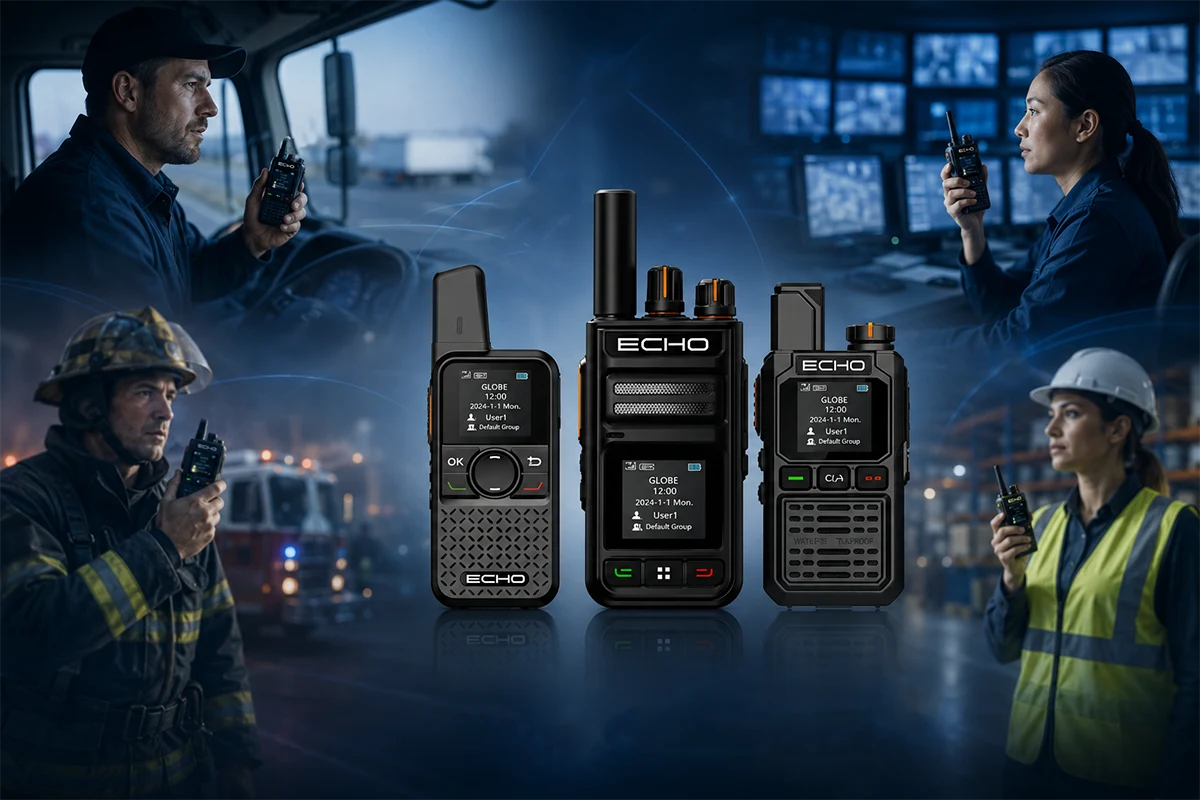
Traditional two-way radios remain common in warehouse radio communications because they provide immediate push-to-talk voice contact. They work well for coordination, loading, security, and urgent instructions. However, voice can be difficult to hear in noisy areas, and spoken instructions are not easy to review later.
PoC Radio for Warehouses
Push-to-Talk over Cellular, or PoC radio, uses cellular or Wi-Fi networks to provide push-to-talk communication. It can connect teams across a large site or between multiple locations.
PoC is useful for wide-area communication, group calling, and coordination between warehouse, transport, and field teams. Its main limitation is network dependence, and it may require SIM cards, service plans, or a management platform.
Pager Alerts for Machines and Targeted Staff Messages
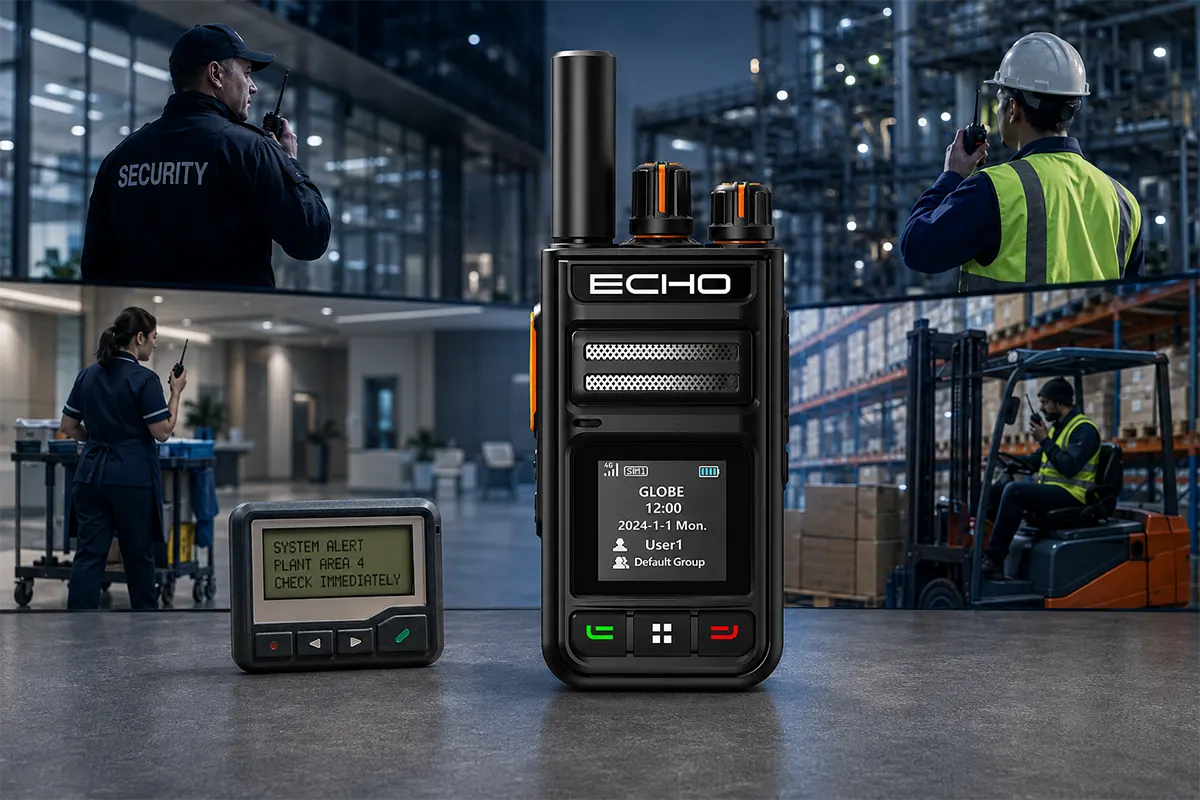
Pager-based alerts are useful for sending short messages to specific workers or groups. Typical uses include machine faults, temperature warnings, maintenance calls, and urgent instructions.
A typical alert path is:
Alarm source or software → controller → paging transmitter → pager
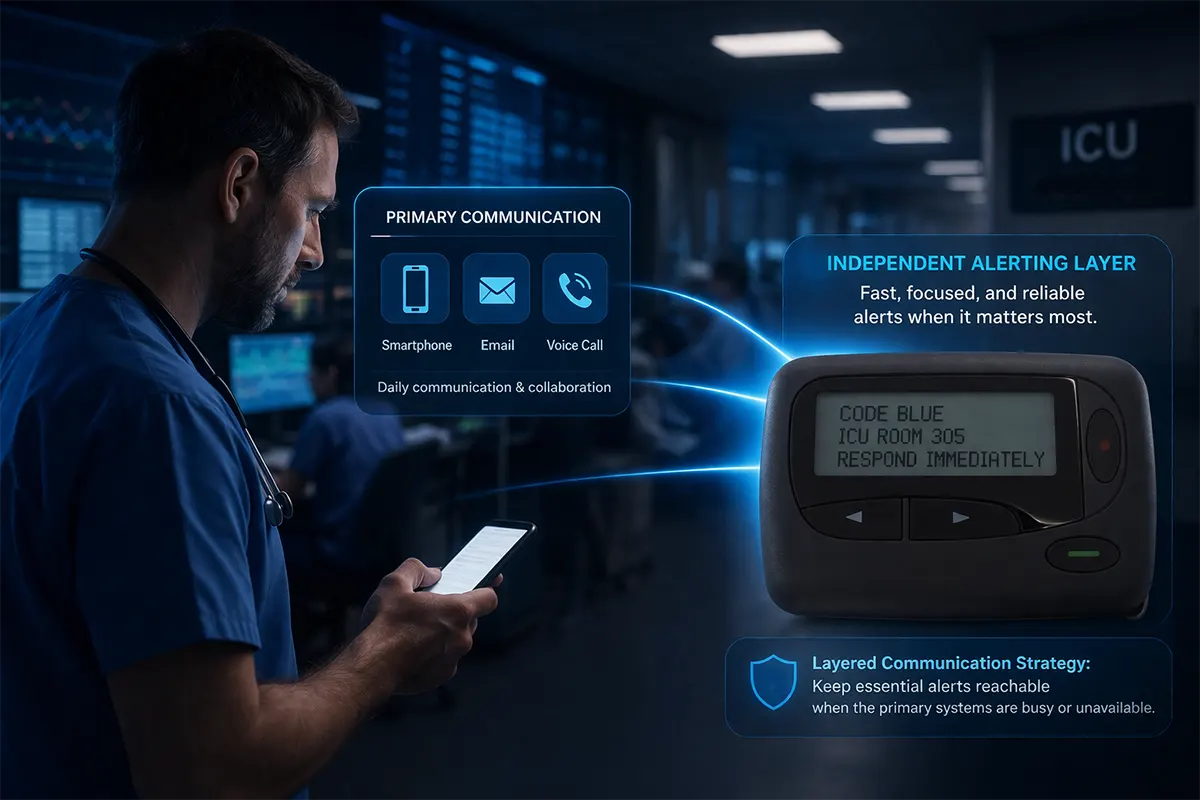
Pagers can provide vibration, sound, and readable text, which helps in noisy environments. They also reduce unnecessary radio traffic because only the intended person or group receives the message.
A pager alert system is different from a warehouse PA paging system. A pager system sends targeted messages to personal devices; a PA system broadcasts voice through speakers.
Standard POCSAG pagers are generally one-way. They can receive alerts but normally cannot send a reply or acknowledgement. Projects requiring confirmation or two-way communication need another endpoint or platform.
Intercom and PA Systems for Area-Wide Announcements
Intercom and public address systems suit evacuation instructions, shift announcements, visitor calls, and urgent messages for an entire zone. Their strength is broad reach; their weakness is limited targeting.
Mobile and Wi-Fi Messaging
Smartphones, tablets, and Wi-Fi terminals can support task lists, files, and non-urgent updates. However, mobile alerts depend on coverage, battery level, app status, and user attention.
Warehouse Communication System Comparison
The table below compares the main communication options by message type, reply capability, network dependence, and typical warehouse use.
| Communication Option | Best For | Message Type | Reply Capability | Network Dependence | Main Limitation |
|---|---|---|---|---|---|
| Two-Way Radio | Daily coordination | Voice | Yes | Private radio network | Limited message record |
| PoC Radio | Multi-site communication | Voice and data | Yes | Cellular or Wi-Fi | Depends on network |
| Pager Alert System | Machine alarms and targeted alerts | Short text or numeric | Usually no | On-site paging system | Mainly one-way |
| Intercom / PA | Area-wide announcements | Voice broadcast | Usually no | Wired or IP infrastructure | Not targeted |
| Mobile Messaging | Workflow and non-urgent updates | Text, files, and app alerts | Yes | Wi-Fi or cellular | Alerts may be missed |
No single warehouse communication system is ideal for every task. Many facilities combine voice communication, targeted pager alerts, and area-wide announcements to cover different operational and safety needs.
How to Choose the Right Warehouse Communication System
Does the Message Need a Reply?
Use two-way radio or PoC when workers must answer immediately. A pager alert may be enough when the message only needs to reach a technician or response team.
Is the Message Targeted or Facility-Wide?
Individual or department alerts should use personal devices. Public emergency instructions are better suited to PA or intercom systems.
Can the System Depend on Cellular or Wi-Fi?
PoC and mobile messaging are practical when networks are reliable. On-site radio or paging can reduce dependence on public networks.
Does the Warehouse Need Voice, Text, or Both?
Voice is fast for coordination. Text is better for alarm codes, equipment names, and instructions that may need to be reread.
How Complex Is the Site?
Metal racks, concrete walls, cold storage, yards, and separate buildings can create dead zones. Coverage testing should be completed before deployment.
Why a Hybrid Approach Often Works Better
A strong warehouse communication plan often combines:
- Two-way or PoC radio for daily voice coordination
- Pager alerts for machine faults and targeted maintenance calls
- PA or intercom for evacuation and facility-wide announcements
- Mobile devices for workflow data and non-urgent updates
The key question is not “Which device is best?” but “Which communication method is best for this task?”
FAQ
1. What is the best communication system for a warehouse?
There is no single best option. The right choice depends on whether the warehouse needs voice coordination, targeted alerts, wide-area communication, or public announcements.
2. Are two-way radios suitable for warehouses?
Yes. They are effective for immediate voice communication, but less suitable for detailed text alerts, message records, or some multi-site applications.
3. Can pagers be used for warehouse machine alarms?
Yes. A controller and paging transmitter can send alarms to selected pagers when pager frequency, baud rate, and capcode/RIC, as well as message format are compatible.
4. What is the difference between warehouse paging and a pager alert system?
Warehouse paging often refers to PA speakers and public announcements. A pager alert system sends targeted messages to personal receiving devices.
Conclusion
A warehouse communication system should be selected around real tasks, not one preferred device. Two-way radios support immediate voice coordination, PoC radios extend communication across wider areas, pager alerts deliver targeted messages, and intercom or PA systems handle public announcements.
For many facilities, a hybrid approach provides the best balance of speed, coverage, network independence, and message clarity.
Manufacturing Communication Systems: How Machine Alarms Reach the Right Staff
POCSAG Pager Frequencies: VHF/UHF Bands, Baud Rate and Capcode
Related Article