PoC Radios for Security, Facility, and Mobile Teams
Quick Answer
PoC radios are suitable for teams that need simple, real-time group voice communication across different work areas. For security, facility management, logistics, and field service projects, buyers should evaluate the working area, network service, team structure, group communication needs, and daily operating conditions before choosing a model.
Application-Based Selection Comes Before Product Selection
For many B2B buyers, the first question should not be “Which PoC radio model should I choose?”
A better starting point is:
What kind of team will use the device every day?
A security team, a facility maintenance team, a warehouse team, and a mobile field service team may all use PoC radios, but their working patterns are not the same. Some users need fast group calls during patrol. Some need supervisor instructions across several buildings. Some need coordination between loading areas, vehicles, and warehouses. Others need a simple push-to-talk device for outdoor or on-site service work.
This is why application-based selection matters.
PoC radios can support group communication over cellular or data networks where service is available. But the right project fit depends on more than the device itself. Buyers should consider where the team works, how often users move, whether group calls are needed, whether dispatcher messages are required, and whether the service setup is ready.
The value of a PoC radio is not only in the product specification. It is in whether the device matches the team’s daily communication workflow.
Security Teams: Fast Response Across Patrol Areas
Security work often involves multiple zones: entrances, gates, parking areas, lobbies, control rooms, warehouses, and outdoor patrol routes.
For these teams, communication needs to be direct and simple. A supervisor may need to contact all guards in one group. A patrol member may need to report an incident quickly. A control room may need to send instructions without calling each person separately.
PoC radios can be useful in this type of work because they support push-to-talk communication for team coordination. Depending on the model and service setup, functions such as group call, selective call, quick group switching, and dispatcher message can help security users communicate more efficiently.
For security projects, buyers should pay attention to the actual working area. Underground parking areas, elevators, concrete buildings, and remote outdoor corners may have different network conditions. Network availability should be checked before deployment.
Facility Management: Maintenance and Service Coordination
Facility management teams usually handle many tasks at the same time: maintenance, inspection, cleaning, engineering support, equipment response, and tenant or internal service requests.
In this environment, communication is often task-based. A supervisor may need to assign a repair job. A technician may need support from another team. A maintenance group may need to move between floors, machine rooms, service areas, and outdoor spaces.
PoC radios can help facility teams keep communication simple. Instead of relying only on phone calls or messages, users can press to talk to a group or reach the right person quickly.
For buyers, the key is to define the user groups clearly. For example, maintenance, cleaning, engineering, security, and management may need separate groups. If the project requires supervisor instructions or centralized coordination, dispatcher message support may also be useful.
Logistics, Warehousing, and Field Operations
Logistics and warehouse operations depend on timing.
A loading delay, missed instruction, or unclear handover can slow down the whole process. Workers may move between storage areas, loading docks, packing zones, vehicle entrances, and dispatch points. Field operation teams may also travel between different customer sites or service areas.
PoC radios can provide a practical voice communication tool for these teams when cellular or data network service is available. They are especially useful when users need quick voice coordination without opening an app, typing a message, or making repeated phone calls.
Typical use cases include warehouse coordination, delivery support, loading area communication, mobile maintenance, and field service response.
Before choosing a model, buyers should confirm working routes, network coverage, battery and charging needs, accessories, and whether the team requires group calls, selective calls, or dispatcher messages.
| Item to Confirm | Why It Matters |
|---|---|
| Working area | PoC radios depend on cellular or data network availability. |
| Team type | Security, facility, logistics, and field teams may need different functions. |
| Group structure | Users may need separate groups for patrol, maintenance, dispatch, or management. |
| Voice communication | Buyers should confirm whether group call or selective call is required. |
| Dispatcher needs | Some projects need supervisor messages or control-room coordination. |
| SIM / network service | LTE PoC radios require proper network access and service setup. |
| Battery and charging | Shift-based work requires suitable battery and charging planning. |
| Accessories | Clips, antennas, chargers, and spare batteries can affect daily field use. |
| Service configuration | Push-to-talk communication usually needs account, group, or platform setup. |
Where Echo3 and WEX PoC Radios Fit
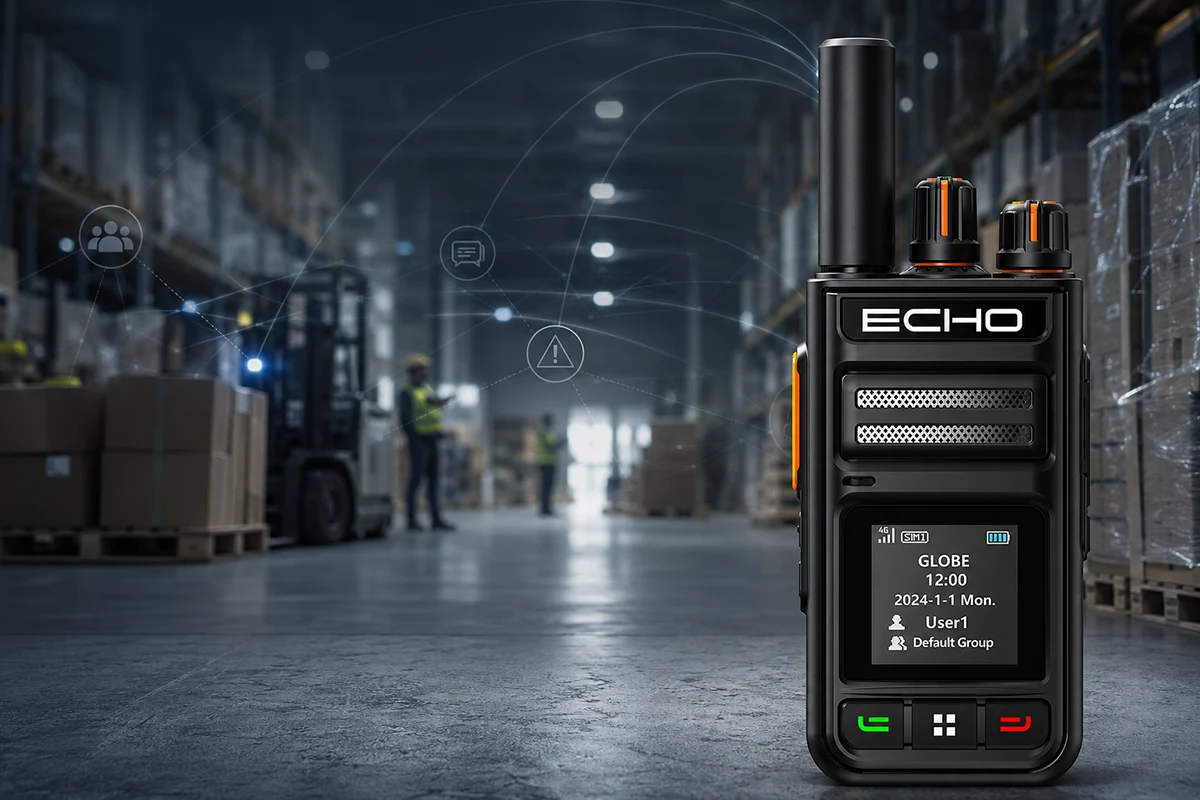
Echo3 is one option in the WEX PoC radio series for LTE-based push-to-talk communication. It supports practical team communication functions such as group call, selective call, dispatcher message, fast charge, and quick group switching.
These functions can support daily communication for security patrols, facility maintenance teams, warehouse operations, and mobile field users.
At the same time, different projects may need different device choices. Some buyers may focus on screen size, battery capacity, charging method, accessories, or operating environment. Others may need a model that better fits their team structure or service setup.
For this reason, Echo3 should be considered as part of a broader PoC radio selection process. WEX PoC radio models can be reviewed according to the actual application, user groups, network conditions, and deployment requirements.
FAQ
Are PoC radios suitable for security teams?
Yes. PoC radios can be useful for patrols, gates, parking areas, and incident response when security teams need fast group voice communication across different work areas.
Can PoC radios be used for facility management?
Yes. Facility teams can use PoC radios for maintenance coordination, service response, supervisor instructions, and communication across floors, buildings, or service zones.
Do PoC radios need SIM cards or network service?
Usually, LTE PoC radios need SIM cards or supported network service. Buyers should confirm local network coverage, data service, and service configuration before deployment.
Are PoC radios better than mobile phones?
They are different tools. Mobile phones are useful for calls, apps, and messages. PoC radios are more suitable when teams need simple push-to-talk group communication during daily field work.
Conclusion
PoC radios are most valuable when the application matches the team’s daily communication needs.
For security, facility management, logistics, warehousing, and field service teams, PoC radios can support fast voice coordination, group communication, supervisor instructions, and dispatcher messages where cellular or data network service is available.
The right selection should start from the working environment, not only the device model. Buyers should confirm network coverage, team structure, group communication needs, service setup, accessories, and daily operating conditions before deployment.
Echo3 and other WEX PoC radio models can be considered for projects that require LTE-based push-to-talk communication and practical team coordination.
How to Choose a POCSAG Paging Transmitter for Your Pager System
SIM, Cloud SIM, and Network Planning for PoC Radio Communication
Related Article